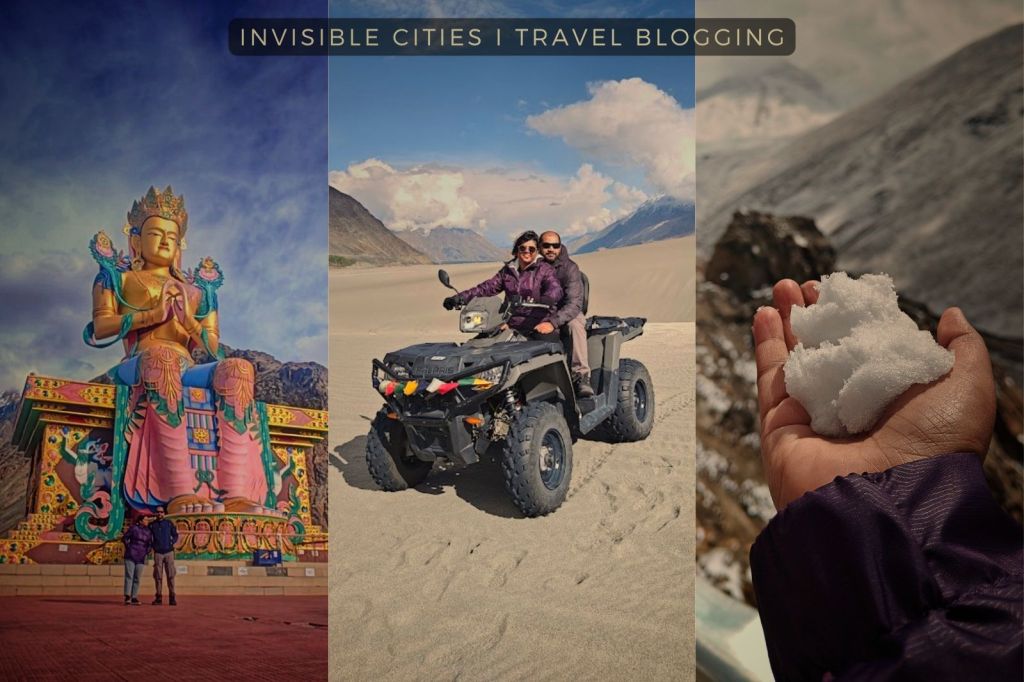
After a day of acclimatization in Leh (as we already shared with you), it was finally time to move again. This time, towards Nubra Valley. The plan was simple. Travel from Leh to Nubra Valley via Khardung La.
We were excited to cross the famous Khardung La Pass. And experience the transition. From barren peaks to frozen ones and then bumping into the lush green terrains and sand dunes. Can you imagine?
A landscape transition that is too much to perceive even for Instagram reels.
Let me tell you how!
Early Morning in Leh: Road to Khardung La Pass
We left Leh early with Dorjee, our guide, and a car packed with snacks, jackets, and medicine. Ayush, as always, double-checked if I had my AMS (Acute Mountain Sickness) pills. It already felt like an expedition!
However, soon all the surprises started shaping up the day.
Honestly speaking, the excitement faded a little when we hit our first roadblock. Snowfall overnight had caused a huge cold obstacle on the way to Khardung La.

Lines of cars and bikes (yes the pretty Himalayans) stood waiting. Some tourists looked frustrated, while others were clicking selfies.
We sat quietly inside the car, sipping on water, as instructed by Dorjee. We soon felt bored. So we stepped out of the car to talk to fellow tourists. Everyone debated whether we would even make it to Khardung La. I can’t express how sad we felt then. Ofcourse, right?
We were stuck there for more than 3 hours. Our hands and feet had started to freeze, but we didn’t complain, lest the other one got too worried. Both were freezing. Quietly.
Yes, of course we were wearing enough winter gear. But it was not ENOUGH! The temperature and altitude just gets to you! Soon, my head felt like it was getting blocked and heavy. I still chose to ignore it, because what could Ayush even do? I didn’t want him to worry. He was already anxious!
But everything felt warmer (ironically), when suddenly we felt tiny snowflakes land on our bare face and dark woolen gloves.
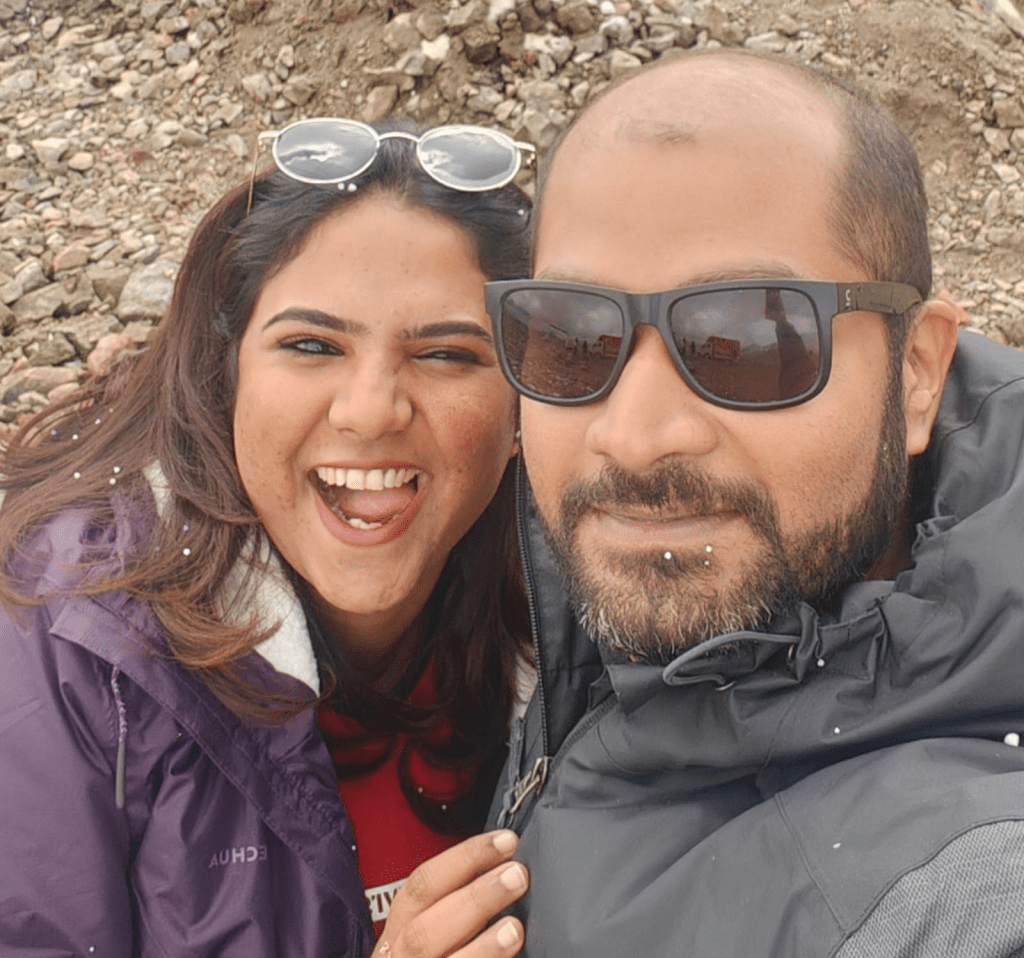
Yes! Our first snowfall together….out of nowhere!
First Snowfall on the Way to Khardung La
A few kilometers into the climb, the snowfall began. At first, it was light and scattered. But by the time we reached a view point on the way, the flakes became heavier.
It was our first real snowfall in Ladakh, and the excitement made us forget the delays for a while.
We even started collecting snow through the car windows like children. The higher we climbed, the thicker the snow blanket became.

It was intimidating. It was beautiful. It was everything that I hoped for.
As the snowfall increased, so did the stoppages. Near South Pullu, traffic came to a halt again. Local taxis and army trucks managed better on snow, but many private cars struggled on slippery slopes. I was clearly nervous!
But Dorjee reassured us, reminding us this was normal in Ladakh winters.
Trusting him, we relaxed a bit.
We stepped out, stretched our legs, and tried to keep warm. Thankfully, small tea stalls had sprung up, serving steaming cups of chai and packets of snacks. Ahh, what a blessing!
To forget the loss of time in our heavily planned schedule, we started to distract ourselves. First, we built a tiny snowman on the roadside. The way we started laughing in the middle of the chaos, people judged us for sure.
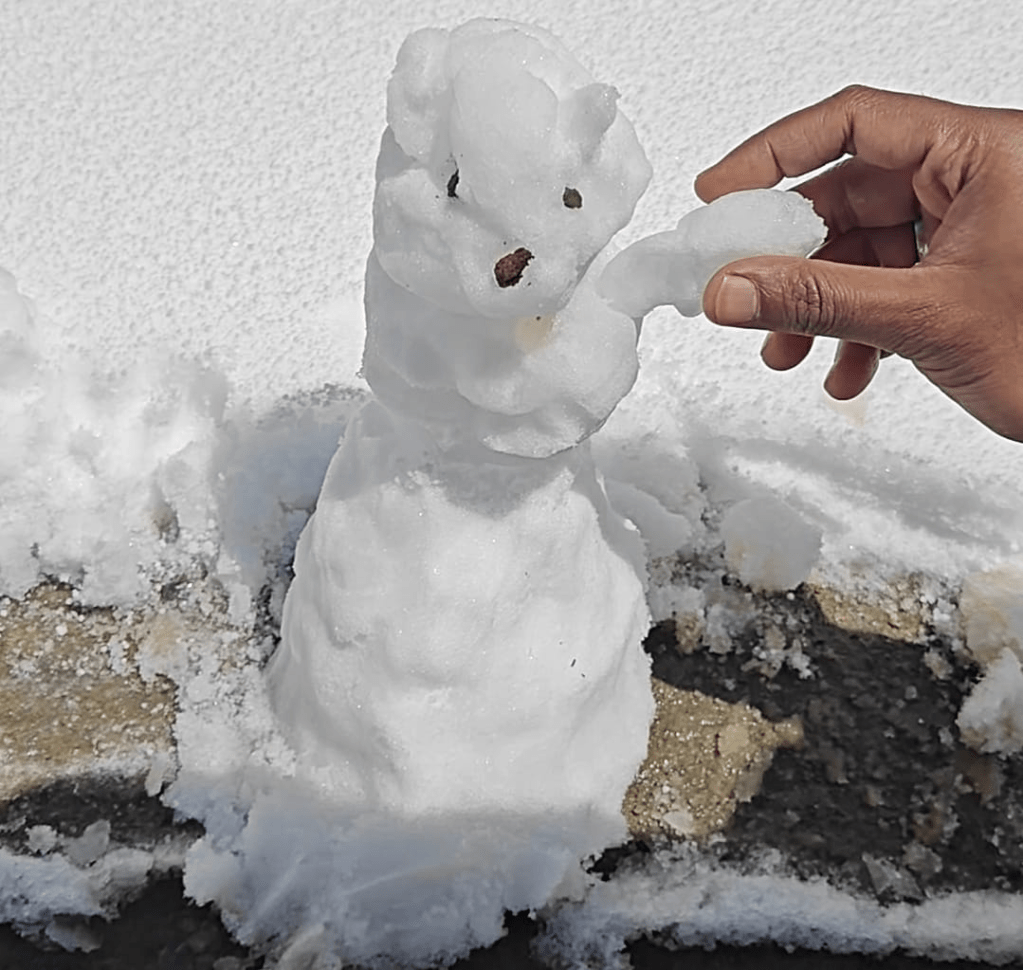
But you get me, right? Even though the cold was biting, those moments made the wait easier.
Altitude Sickness at Khardung La
The slow climb gave us time to soak in the white covered views, but also tested us physically. With every turn, the air grew thinner.
I began to feel the graver signs of AMS. Started with deeper headache, dizziness, and grew with constant fatigue. Dorjee suggested I sip water and keep calm, but it was difficult. Ayush looked worried, though he didn’t say much (as usual).
When we finally reached Khardung La top (5,359 m), the weather turned harsh.

Heavy snow and strong winds made it nearly impossible to stay outside for long.
We managed a quick photo session, struggling to keep our faces uncovered. Still, there was a thrill in standing at one of the highest motorable passes in the world. Goosebumps!
We even spoke briefly with a group of bikers who had reached just before us.
Their faces were red from the cold, but their energy was infectious. They shared stories of pushing bikes through patches of ice, reminding us how adventurous this route can be.
Ayush had been on a bike trip to Ladakh last year. Even he affirmed that the weather was worse this year!
But Trust me, despite the AMS, I was loving every bit of the journey…
Descending from Khardung La: From Snow fall to Sand Dunes
As we began the descent, the snow gradually thinned out. The landscape shifted from white slopes to rocky brown valleys. This was the transition I was talking about at the beginning!
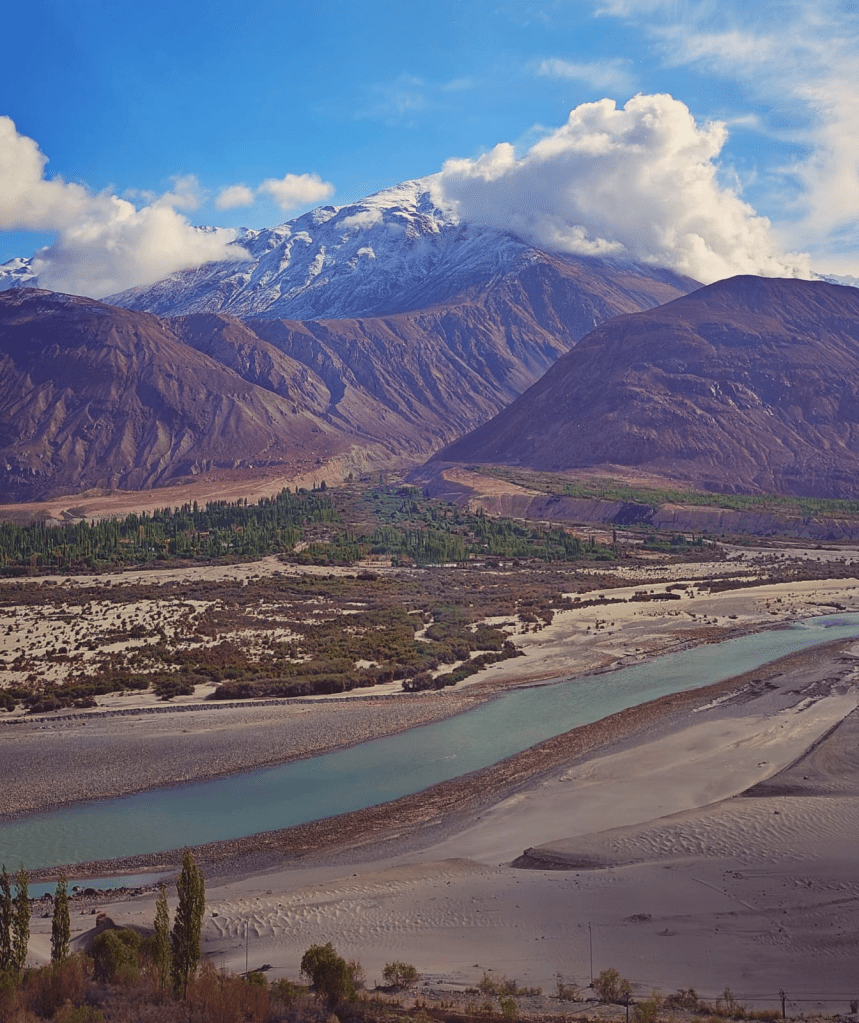
I was still feeling weak from AMS, so our only thought was to get down to lower altitude quickly. And eat something.
By the time we stopped for lunch, I was drained.
Dorjee knew exactly where to stop. A small dhaba welcomed us with warmth and the aroma of home-cooked food. We ordered a Kashmiri kahwa, some hot parathas and paneer curry. After hours of numbing cold, nothing could have been more comforting.
Just as we sat down, snowfall resumed. I was happily horrified, haha! We watched the flakes, holding the hot cup of kahwa. These were some of the simplest moments, yet they were the most memorable of the day. Trust me!
By the way, AMS hadn’t left me yet. My head felt heavy, and Ayush insisted me to get some sleep on the way.
Zzzzzz!
Entering Nubra Valley: Green Patch After Barren
Slowly, the beautiful valley opened up.
The Shyok River appeared, winding quietly through the landscape. Brown slopes gave way to green meadows, and for the first time that day, I felt the AMS symptoms ease.

The contrast was striking.
From freezing winds at Khardung La to soft breezes and fields in Nubra Valley…it was like stepping into another world.
First Stop: Diskit Monastery
Our first major stop in Nubra was the Diskit Monastery. It is the oldest and the largest monastery in the valley. The climb up to the monastery tested our tired legs, but the views were worth it.
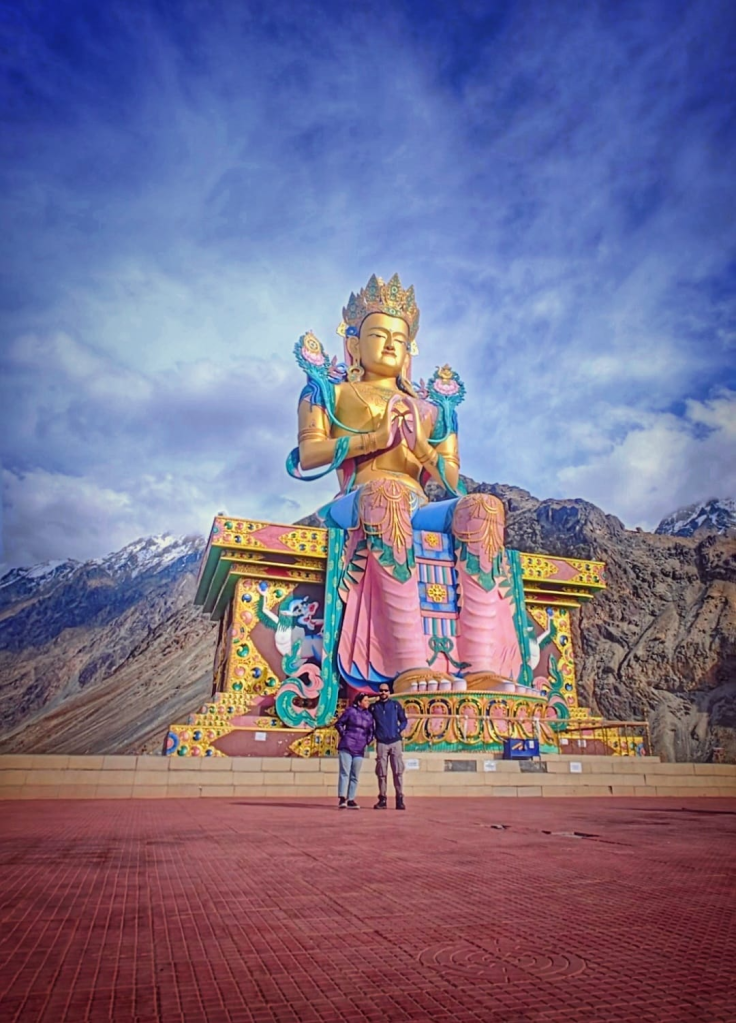
At the top stands the towering Maitreya Buddha statue, looking across the valley. What a majestic sculpture! The sun was warm, but the wind at that elevation was really strong.
We shivered as we tried to take in the panoramic views. From here, Nubra Valley looked endless: green fields, the silver ribbon of the Shyok River, and mountains in every direction.
I had started making retirement plans already!
Hunder Sand Dunes: the Transition from Snow to Desert
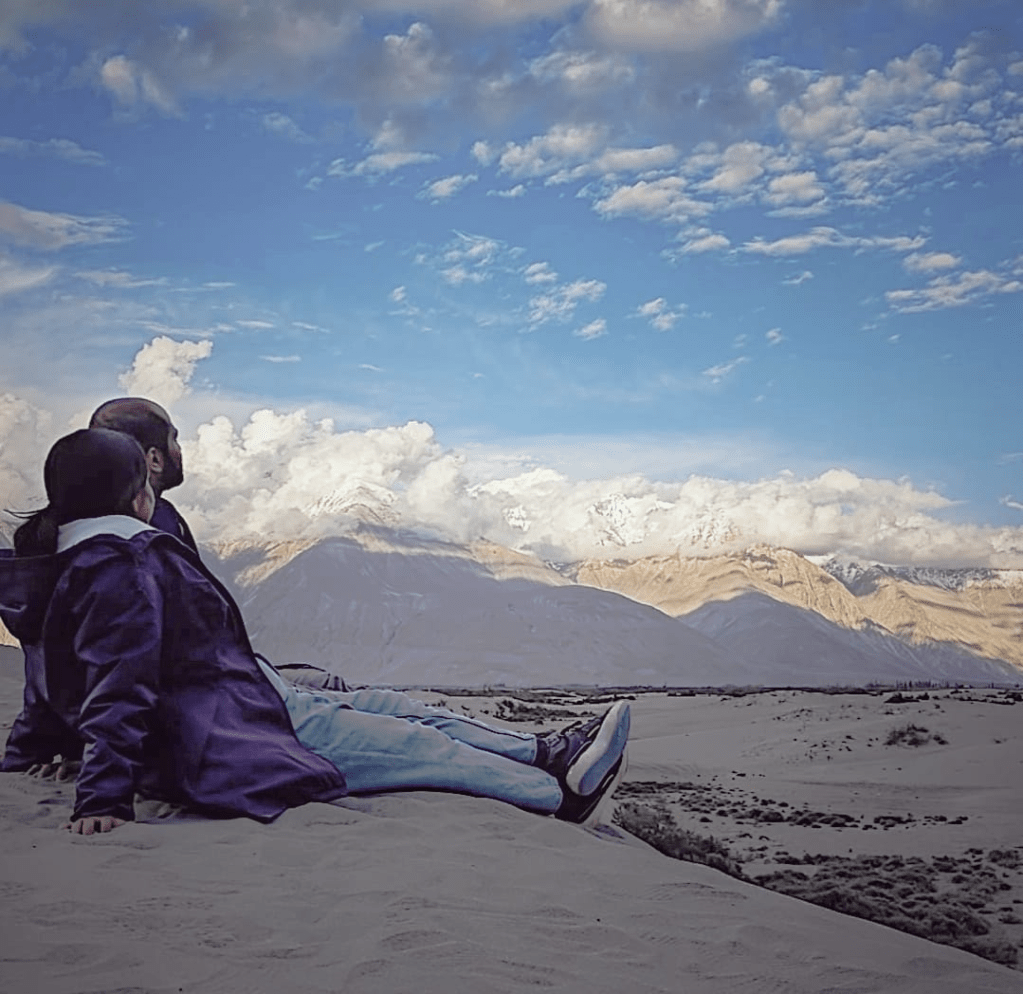
By evening, we drove further to Hunder village, home to the famous Hunder sand dunes in Ladakh. The scene was surreal. I can’t stress this enough. In one day, we had crossed a frozen pass, lush valleys, and now stood in a cold desert.
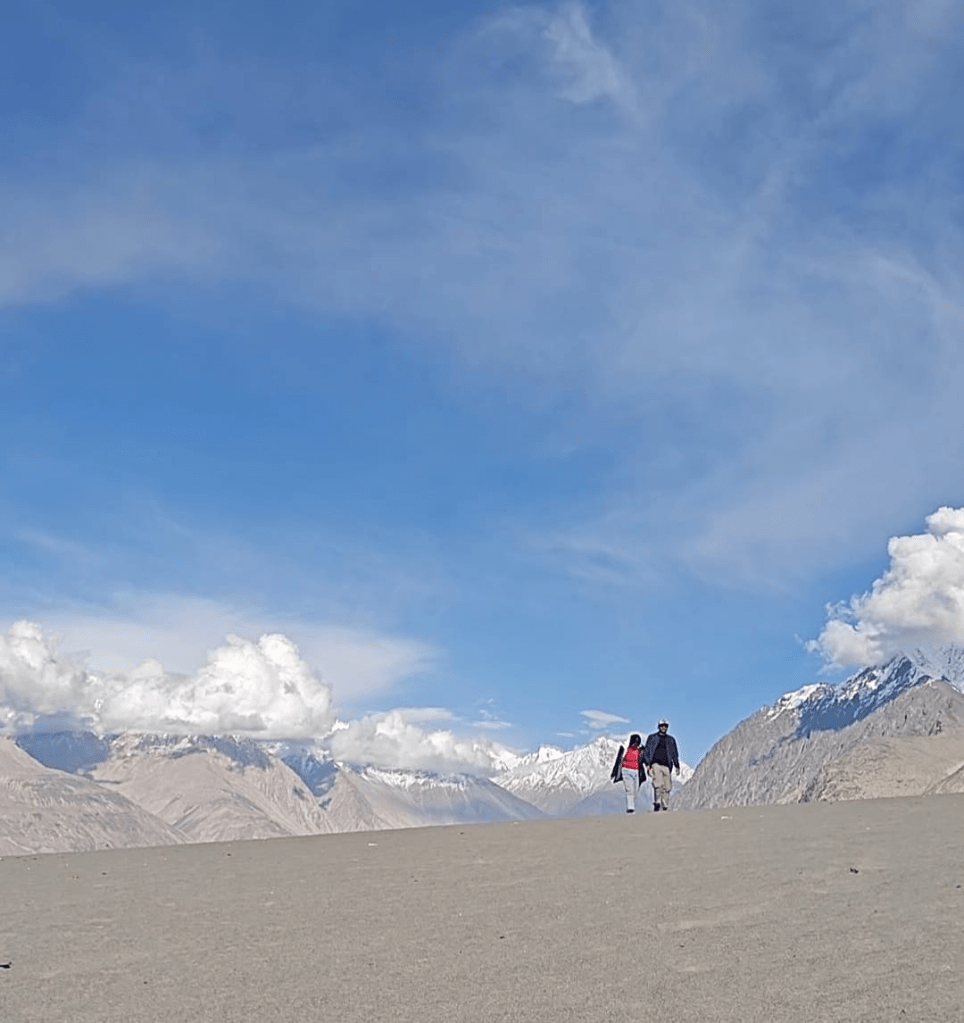
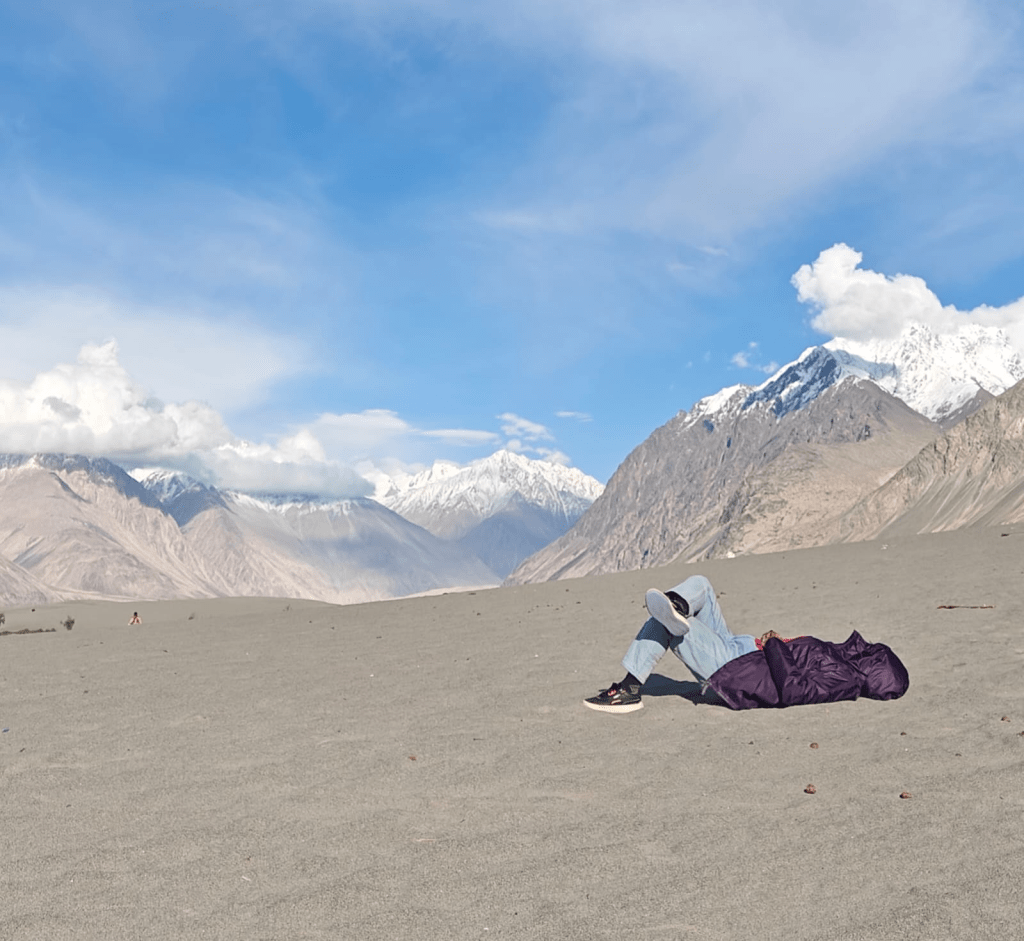
When we stepped out of the car, the sand was glowing golden in the setting sun. We played around like children. Running across the dunes, lying on the sand, and staring at the sky framed by snowy peaks…This is what they call main character energy, you see!
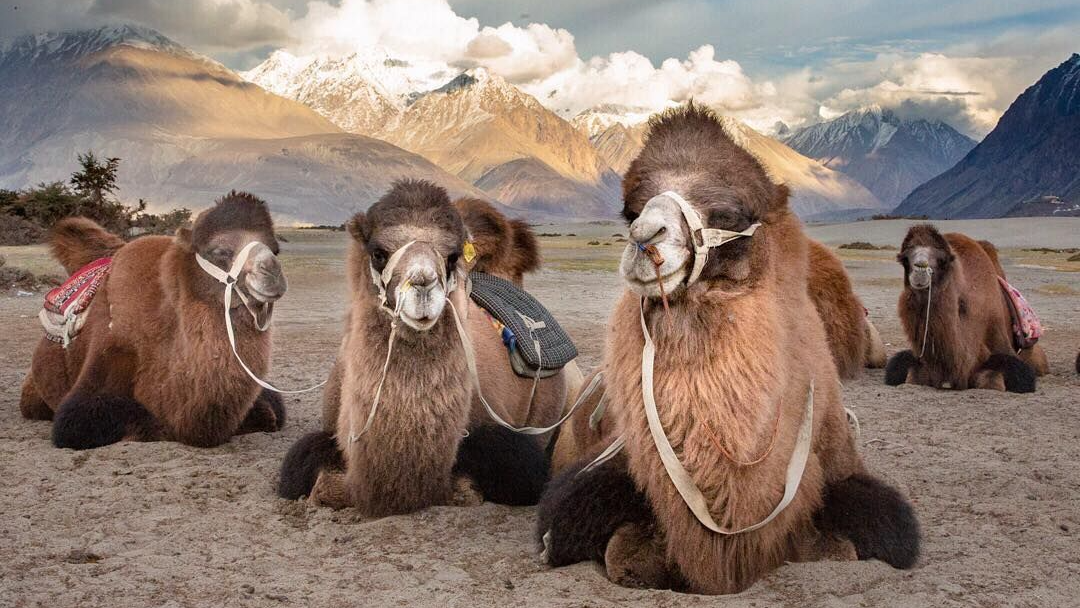
Nearby, the Bactrian camels of Nubra Valley were grazing lazily.
These two-humped camels were once used by traders on the Silk Route. Now, they offer short rides to visitors. We joined the small fair atmosphere, with camel rides, local stalls, and steaming momos with tea.
As the sun dipped, we sat quietly by a stream of the Shyok, watching its waters reflect the fading light. We contemplated how lucky we were to witness this richness of nature, and that too, together!
Seriously!
Reaching Our Stay in Diskit: A Cozy End to the Day
After sunset, we returned to Diskit for the night. Our stay was simple but cozy.
From the balcony, the view of the valley under starlight was breathtaking. The cold was biting though, and we couldn’t stand outside for more than a few minutes. Our bodies had experienced enough cold for the day and needed some rest.
One of the bell boys came to our room with hot water, and we started chatting with him. This is one of the best parts of travel. You know, meeting new people, learning new cultures…
He told us how life continues in these cold months in the most harsh conditions. Even hot water was scarce due to disrupted supply, but nobody seemed to mind. Their resilience was indeed humbling.
Next up, dinner was warm and comforting. We gorged on to bowls of hot soup followed by rice and curry. That night, sleep came easily, accompanied by the murmur of the river and the lingering image of falling snow.
Key Takeaways for Leh to Nubra Valley via Khardung La
Our Leh to Nubra Valley trip via Khardung La taught us a few important lessons:
- Prepare for snowfall: Weather can change quickly. Keep warm clothes, gloves, and waterproof shoes.
- Altitude matters: Spend a day acclimatizing in Leh before the climb. Carry AMS medication.
- Road delays are normal: Traffic jams at Khardung La are common. Stay patient and enjoy the breaks.
- Food is comfort: Roadside dhabas serve the warmest, most satisfying meals when you need them most.
Final Thoughts
The second day of our Ladakh journey was more than just a drive. It was a reminder of Ladakh’s diversity. From the freezing snowfall at Khardung La Pass to the green oasis of Nubra Valley. And finally the Hunder sand dunes.
Every stop added a new shade to the story.
Traveling here isn’t always easy. Snow, AMS, and roadblocks test you. But the rewards in the form of the landscapes, the culture, the people, make every challenge worth it.
As we ended the day in Diskit, Ladakh felt even more mysterious and layered.
It wasn’t just about reaching places, but about experiencing the in-between moments. The tea at Pullu, the snow collected through the window, the laughter on sand dunes, and the warmth of soup at night.
That’s what makes a journey here unforgettable. Don’t you think?


 Invisible Cities
Leave a comment