Allow me to share with you the story of my birthday trip to Sikkim. And Ofcourse it will be followed by a 5 day Sikkim trip itinerary.
Actually, this year i had decided to celebrate my 32nd birthday a bit differently. Like I had imagined/hoped/dreamt in my childhood.
No music, no neon lights, no crowd. Just misty air, mountains, Maggi, and conversations with strangers who smile like they’ve known you forever. So this year, I decided to spend my birthday wrapped in Sikkim’s silence and snow. Letting the Himalayas sing “happy birthday” instead of Spotify.
How does that sound to you? Please tell me you relate to this need!
Bangalore to Gangtok: NH10 Road Trip to the Heart of Sikkim
The morning began in Bengaluru, as most good escapes do. With a strong coffee and the desperate hope that the flight doesn’t get delayed. It didn’t, thankfully!
By noon, we had landed in Bagdogra, that small airport where the air already feels cooler and the chaos fades. Outside waited our cab and the promise of a great time to unfurl in the mountains.
The Bagdogra to Gangtok drive via NH10 is less of a road and more of a flirtation between river and rock. On one side, the Teesta river flowed like a ribbon of brown-blue-green silk. And on the other, slopes dressed in pine whispered stories of monsoon landslides and quick recoveries.
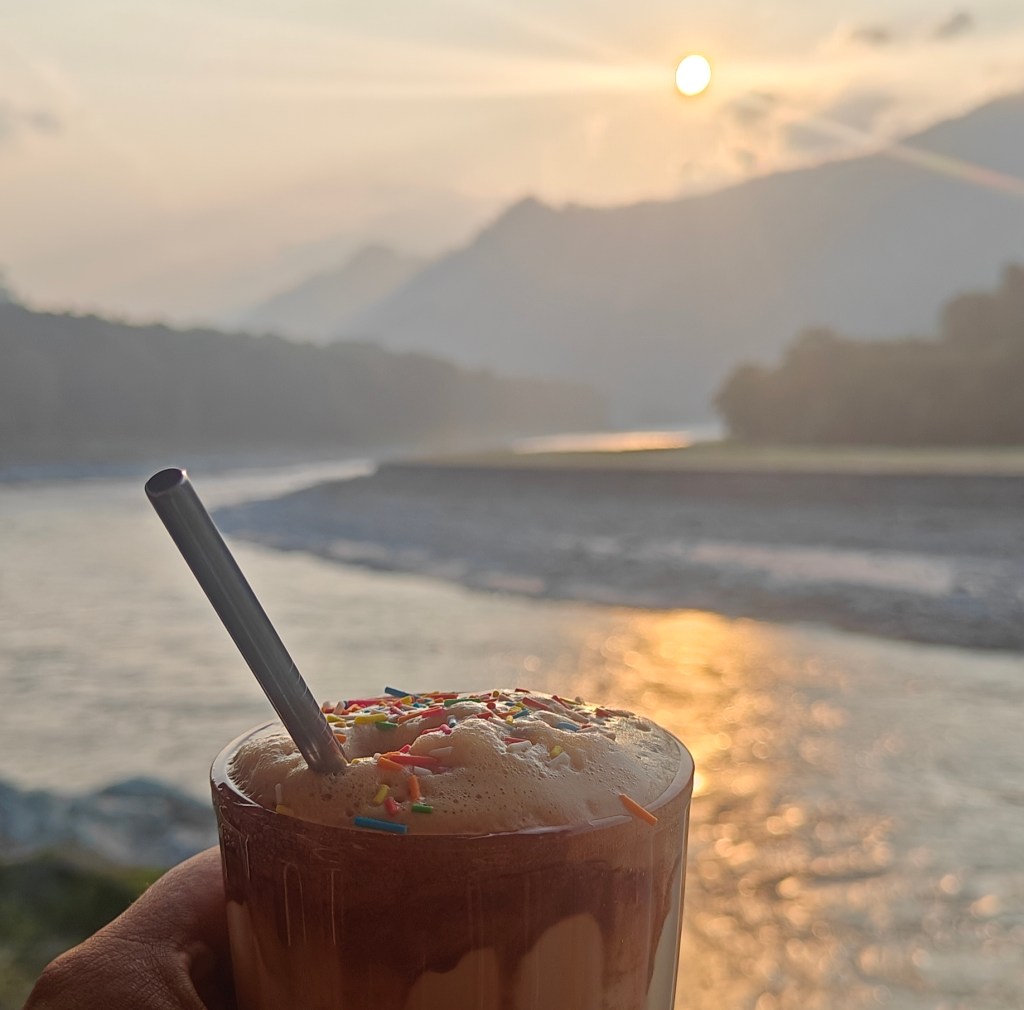
I couldn’t help but hang my head out in awe, and gasp at the hide and seek that was being played between the sun and the trees.
What a lovely sight!
We stopped at a roadside shack for chai and snacks. It was the the kind of place that uses the same oil for everything and somehow makes it taste divine. I know, you know!
Now as the car climbed higher, the sun began to paint the hills in gold.
You see, mountains have this uncanny habit of slowing you down. Not just the car, but your thoughts too.
MG Marg Street, Sikkim
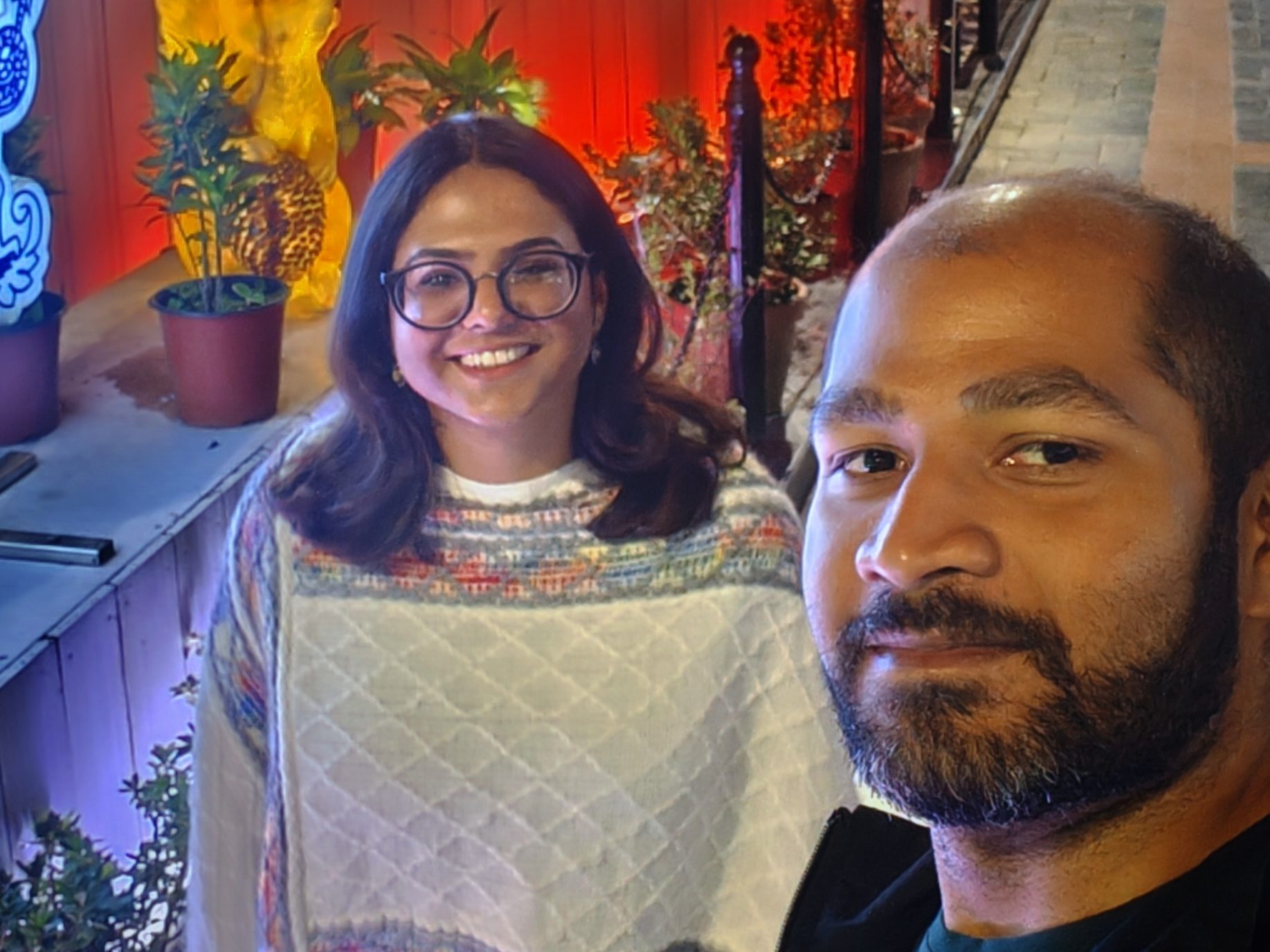
By the time we reached Gangtok, the sky had turned a deep indigo.
We checked into our hotel, showered off the journey, and went straight to MG Marg street.
It felt like the beating heart of Gangtok.
MG Marg at night is an experience. No vehicles, no horns, just laughter, prayer flags, fairy lights, and rows of momos steaming like tiny volcanoes.
We ended the day watching the movie, Titli by Rituparno Ghosh. It’s a part of our travel ritual…to watch movies shot in the places that we visit.
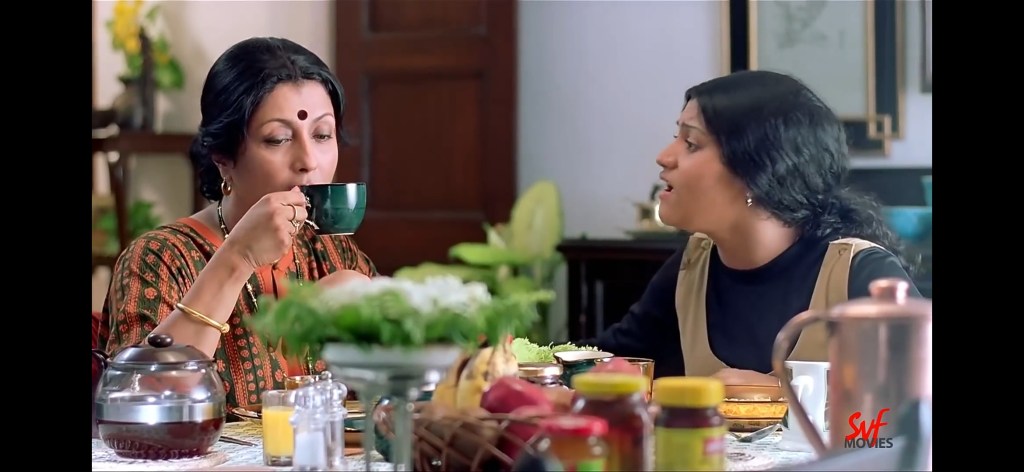
It’s a film set in nearby Kalimpong, so it fitted almost well.
As the fog and cold air rolled outside our window, we slept off way faster than expected.
Day 2: Gangtok to Lachung
The next morning, we woke up before the alarm. Mountain mornings do that to you. The excitement to explore the altitude and serene roads is beyond the peace that sleep offers!
By 7 AM, we were packed, caffeinated, and ready for the Gangtok to Lachung road trip.
Our driver, Tashi, greeted us with a grin.
“The main highway’s gone,” he said cheerfully, “landslide in June. We take the other road.”
Now, that “other road” turned out to be an adventure.
Narrowest cliffs and hairbends, washed-out curves, and scenery so gorgeous it made fear feel optional.
We stopped at the Seven Sisters Waterfall, had breakfast, and chatted with locals over chai. Waterfalls appeared after every few kilometers, each more dramatic than the last.
Looking at my gasps, Tashi turned into a mountain storyteller.We shared tales of politics, local whiskey, food, culture and what not!
By 4 PM, we reached Lachung village, tucked quietly amid clouds.
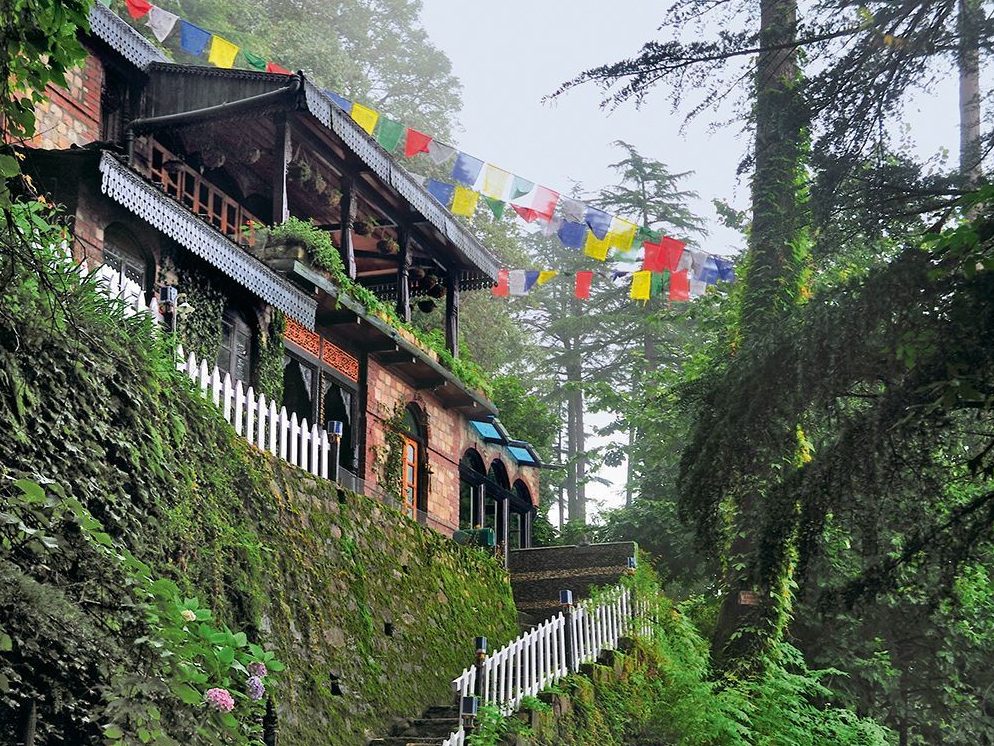
The cold air bit through our jackets; even the air had a certain crispness that city lungs forget. We checked in and freshened up quickly, so as to not miss the evening stroll.
We walked through narrow lanes and passed by prayer flags and wooden homes. Then we ducked into a café to warm up with momos and butter tea.
That night, we also tried long-exposure shots of the night sky. Another of our new mountain ritual.
The stars blinked like shy fireflies over the dark silhouettes of the Himalayas. What a beauty, what a beauty!
Day 3: Zero Point and Yumthang Valley
We woke up the next morning with tangible excitement and shivering bodies.
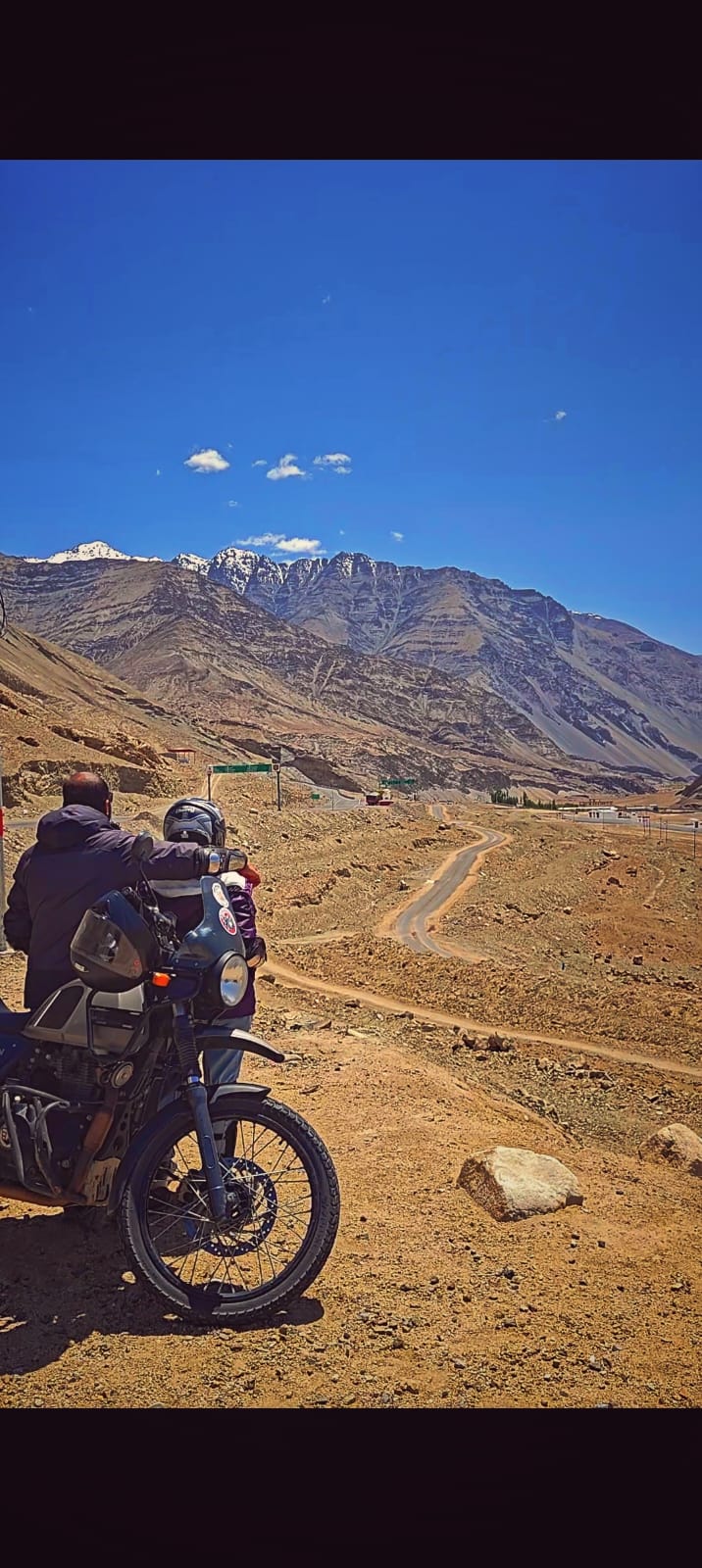
I knew we had to layer up again. Just like we did for Khardung La in Ladakh.
We finished preparing to face the outdoors. After a quick breakfast of a chicken sandwich and chai, we set off.
Tashi was here again, and greeted us with the warmest smile. And soon we started off for Zero point.
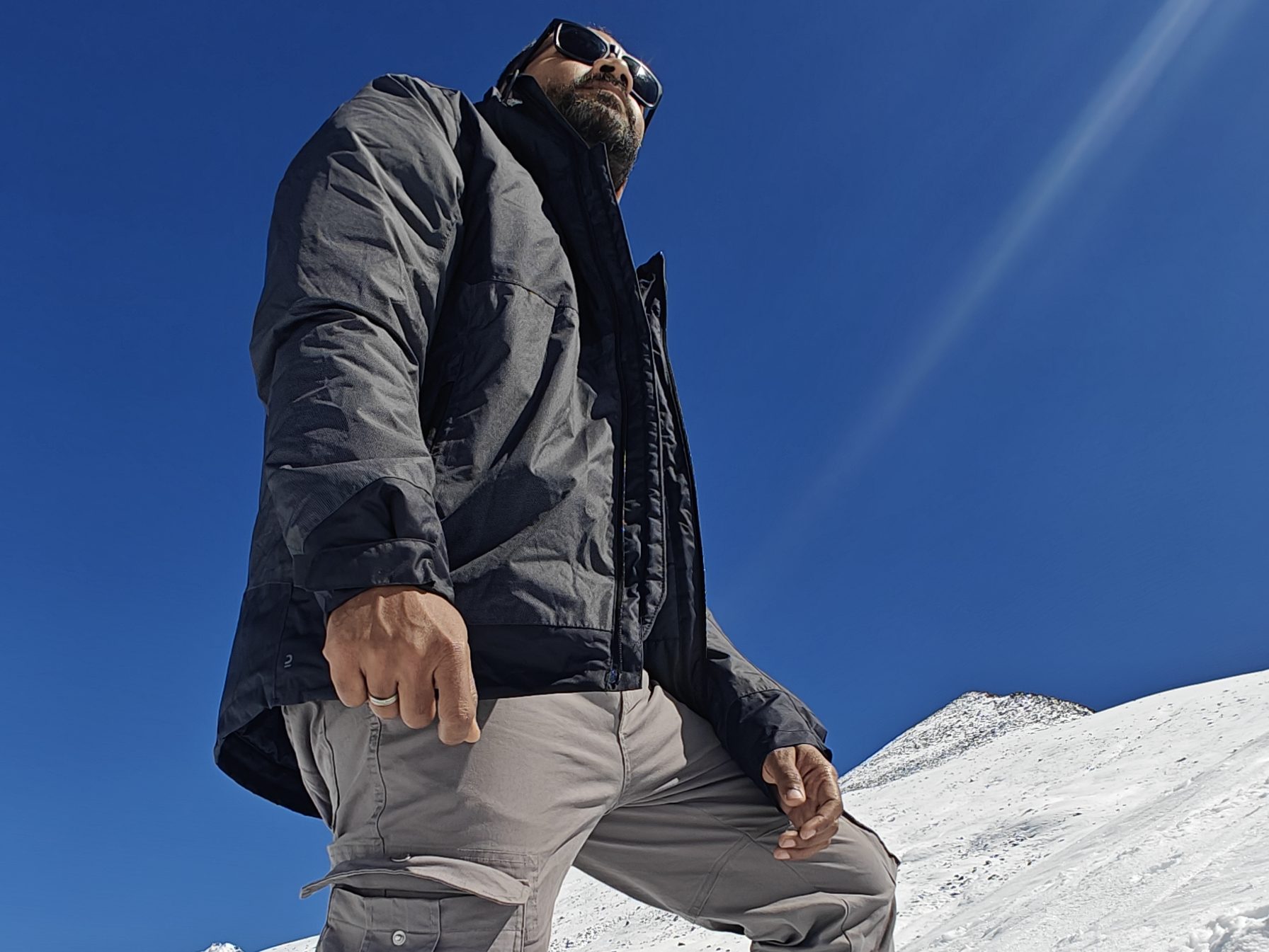
We offered a ride to an old woman on the way. She was carrying a basket of noodles and biscuits to her stall at Zero Point. She told us that, the locals call this as Yumesamdong,. But somewhere along the way, travelers started calling it Zero Point.
Probably because this is where the road gives up, and the mountains take over.
It’s the literal full stop on India’s side of the map. Beyond this, only the army and the clouds have permission to wander.
Traders from Tibet would pass through these frozen trails a few decades ago. They traveled with yaks and wool. This was long before borders and barbed wires claimed the landscape.
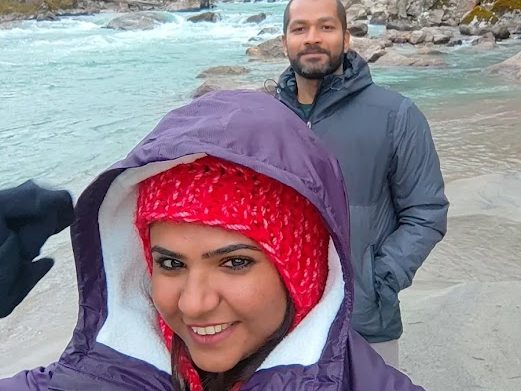
I love this part by the way. Hearing stories of places by the locals. They always have something to add. More than Google offers!
The road to the top was as scenic as it got. The curves, the greenery, the rapidly changing biosphere….every bit of it felt divine.
Soon, we reached Zero Point. Honestly, it felt like stepping inside a snow globe.
The world turned white. Every sound softened, every breath visible. We made snow fairies, rolled in the snow, and laughed till our faces hurt. Soon, the low oxygen levels started taking a toll on my breathing.
We slowed down.
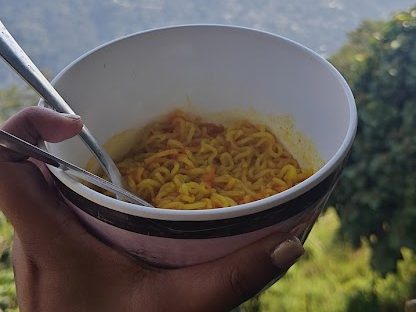
And then, as all great mountain stories go, we had Maggi and chai. Warm, overpriced, and absolutely perfect.
Yumthang Valley
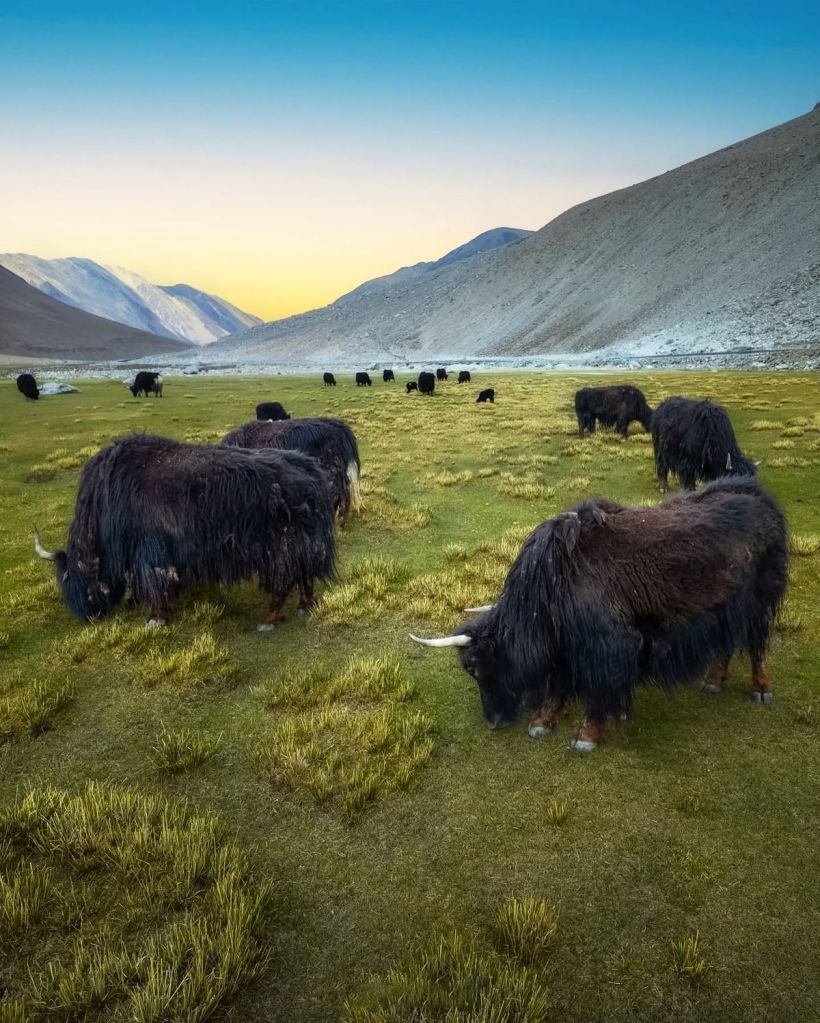
Next came Yumthang Valley. My FAVORITE SPOT IN THE ENTIRE TRIP.
It’s this dreamy meadow surrounded by snow-capped peaks, with a river of impossible blue cutting through it. Oh yes! And hundreds of yaks grazing like old philosophers.
All shapes and sizes of Tibetan prayer flags flapped in the wind, adding rhythm to the silence.
At a small shack near the river, we tasted homemade blueberry wine, sweet and sharp like mountain air. We even bought a bottle to take back, knowing full well it wouldn’t make it past dinner.
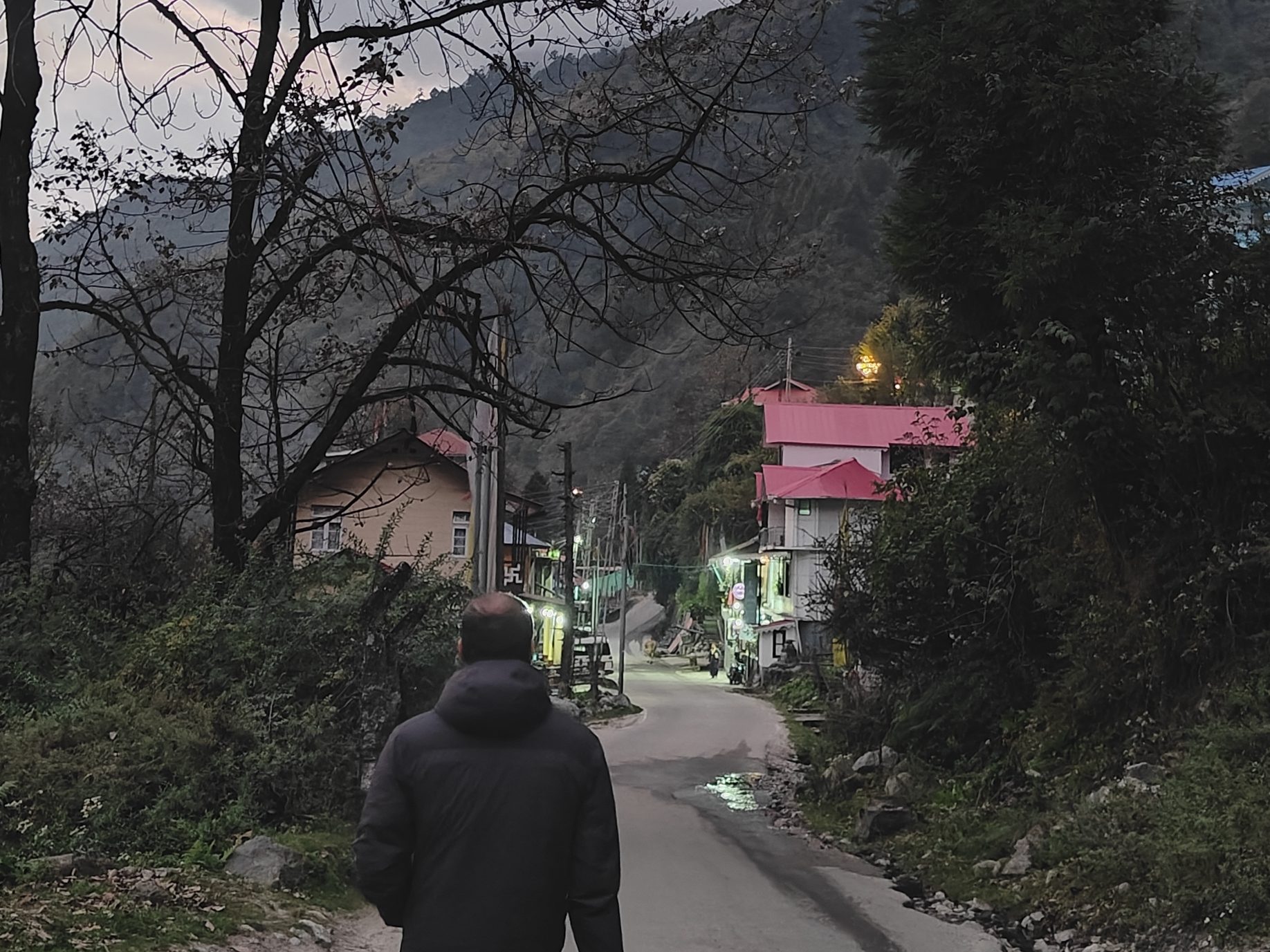
That evening, we explored Lachung village again. We are the type of travelers that can’t sit cooped up inside the hotel room! This time we walked deeper into the village. We were greeted by quiet shops, wooden houses with carved balconies, and children playing in the cold twilight.
Soon, the mountains turned pink, then purple, as if saying goodbye for the day.
Day 4: Lachung to Gangtok (My Birthday Eve!)
The next morning, we began the Lachung to Gangtok drive at 8 AM. The same route that had felt wild now felt like an old friend. Yes, trust me! We remembered every pit stop and every waterfall.
Next up, was lunch time. We plundered a delicious Nepali thali. Rice, dal, pickles, types of saag, and tender mutton. Sometimes the simplest food carries the strongest memories. Yum!

Okay, so by 5 PM, we were back in Gangtok.
The city lights twinkled like they were ready for a celebration. It was fitting, since it was my birthday eve (grins!)
Without wasting any time, we checked in to our hotel and freshened up. We planned to head out for a slow stroll at MG Marg street. This time not as tourists but as temporary locals.
We picked up a cake from a quiet bakery, a bottle of Bailey’s, and a bag full of local trinkets.
Back at the hotel, we celebrated quietly.
Just us, laughter, and the hum of the mountains outside our window. “Perfect”, my heart whispered!
Day 5: About Nathula Pass, Baba Mandir, & Changu Lake
This was the day for which the whole trip was planned. My birthday, ofcourse!
With a tight itinerary set out, we started at 9 AM to explore Nathu La Pass, Baba Harbhajan Singh Mandir, and Changu Lake. The three names that make every travel enthusiast’s heart skip a beat.
Now in contrast to the road to Lachung, this was smooth as butter. The skies were impossibly clear, and the Kangchenjunga peak gleamed like a blessing.
Nathu La Pass

Our first stop was the Nathu La Pass. And if you do not know about Nathu La, here’s a bit.
Nathu La Pass has always been more than just a high-altitude checkpoint. Centuries ago, it was part of the ancient Silk Route that connected India to Tibet.
A trail of salt, silk, horses, and secrets. Traders once led long caravans through these icy bends, their bells echoing against the cliffs. But today, soldiers replace merchants, and flags replace wares but the spirit of passage remains.
Standing there, you don’t just see a border; you feel the weight of all the footsteps that came before it.

At Nathu La, we switched to a permitted vehicle and drove to the Indo-China border. The wind was fierce, the air thin, but the moment unforgettable. Standing there, watching the Indian flag ripple next to the Chinese one, I felt a strange mix of pride and peace.
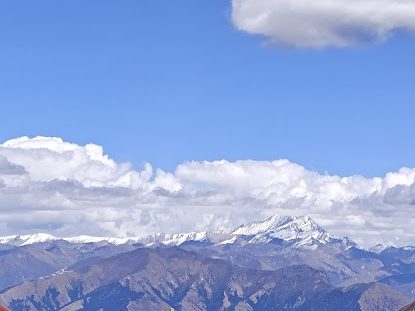
Tashi pointed out a distant white outline. It was Mount Kailash. The sight of it, even faint, felt like a gift wrapped in sky.
Baba Harbajan Singh Mandir
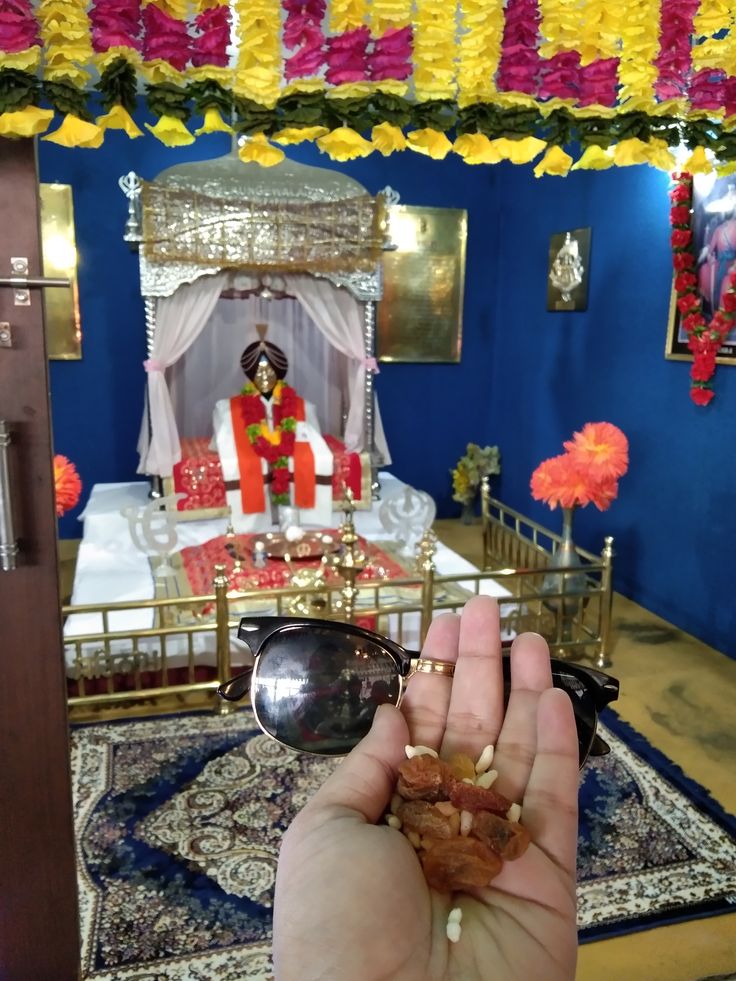
After catching up with oxygen levels, we headed straight for Baba Mandir. It is a shrine built in honor of a soldier, Baba Harbajan Singh. People believe he still protects the region. Inside, the warmth was palpable.
The story of Baba Harbhajan Singh is one that every Sikkimese child grows up hearing. He was a soldier stationed here in the late 1960s.
Legend says, he continues to protect the mountains even after his death. Soldiers claim he appears in dreams, warning them of dangers ahead. His uniform is still pressed every morning, his bed neatly made. Because here, faith doesn’t end with mortality.
It simply changes its form and keeps watch…
The Story of Changu Lake or Tsomgo Lake
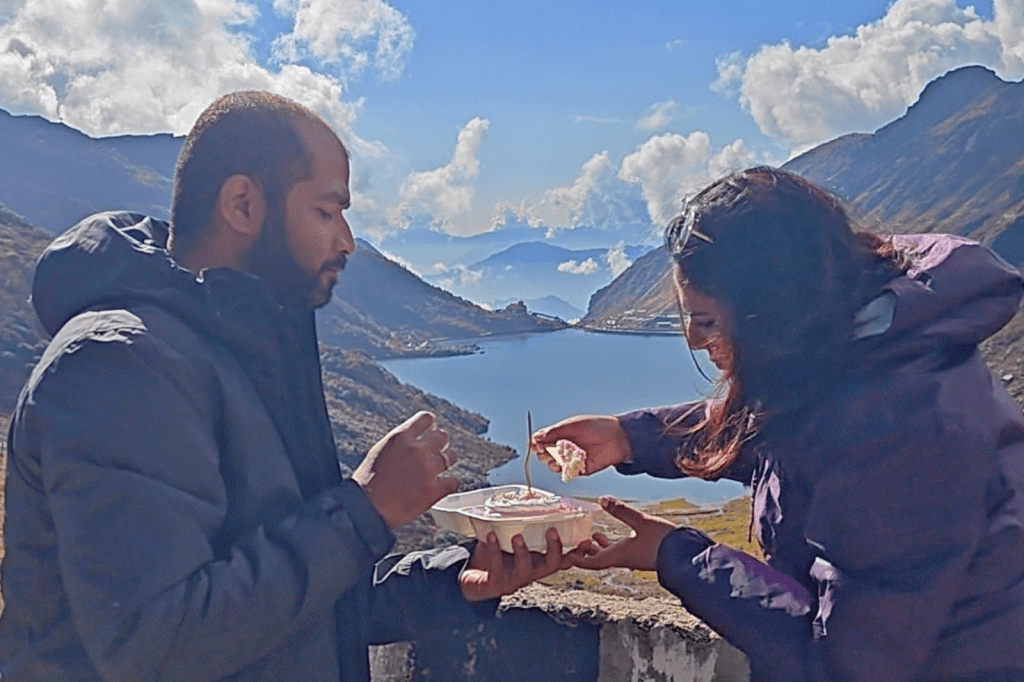
After catching up with the stories of Baba Harbajan Singh, we set off for Changu Lake. But, somewhere along the route, we stopped and cut my birthday cake. Just us, the wind, and the Himalayas watching.
The mini celebration that i was excited for, even at the age of 32!
Anyway, after some cute shots and clicks, we reached the famous Changu Lake.
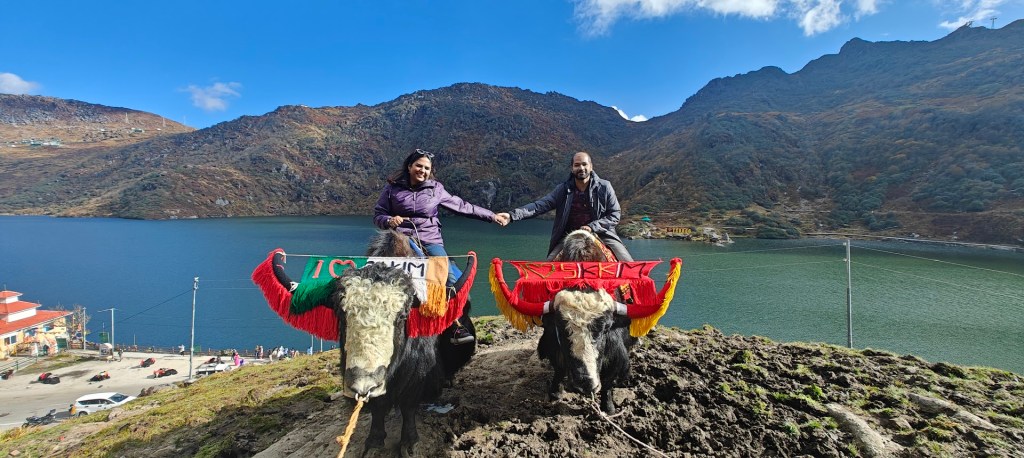
Locals call it Tsomgo, meaning “source of the lake” in Bhutia.
Legends say this shimmering blue oval was discovered by wandering monks who followed the flight of birds to this sacred spot. Over time, it became a site of worship.
The kind where prayers are whispered into the wind rather than shouted into temples.
In winter, the lake freezes into glass; in spring, it mirrors the wildflowers and the flags that guard it. Whether you believe the myths or not, there’s something undeniably spiritual about its stillness.
We gasped at the beauty of the lake for quiet some time. Soon Ayush wanted to add a touch of adventure to the plan. So, we hopped on a yak ride.
The yak moved at its own unhurried pace, and for a while, we matched it. Breathing slower, laughing louder.
Lunch was, unsurprisingly, Maggi again.
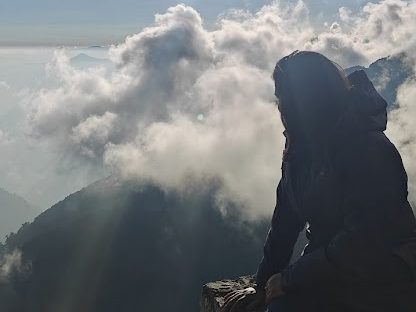
And then as we were heading back, something extraordinary happened: clouds rolled down the hills and spilled onto the road. When I stepped out, I realized we were inside a cloud. For a moment, everything was still.
Dramatically I felt, that’s how the mountains wished me. In whispers, not fireworks.
As the day closed in, we wrapped up the eve with an authentic Sikkimese dinner. It included Nepali-style mutton curry. We also had tongmo bread rolls, kalo dal, and tangy cheese achar. Lastly, there was a sip of Tigmo, the local millet-based liquor served hot.
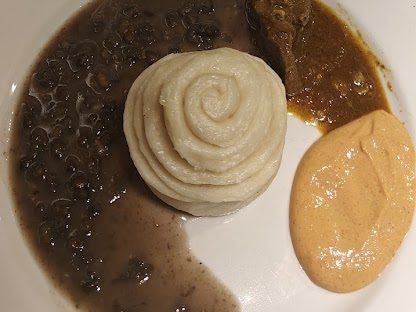
Earthy, comforting, and perfect for a mountain night.
What a day!
Goodbye Sikkim ~ The Lava-Lolegaon Route and Last Glimpse of the Himalayas
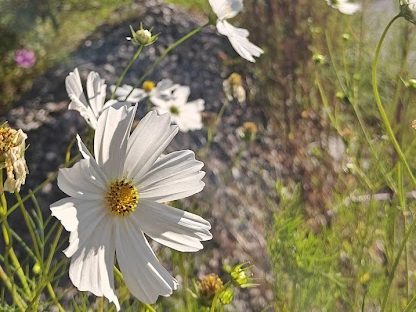
It was the day we were heading home. I was sad anyway. But the morning came with a twist.
NH10 was closed for repairs. So we had to take the Lava–Lolegaon route to Bagdogra. I was excited because, it’s a heavenly route winding through pine forests and sleepy villages.
It was longer, slower, and even more beautiful, like Sikkim’s way of saying a gentle goodbye.
As the hills faded in the rear-view mirror, I realized that this wasn’t just a Sikkim travel itinerary anymore. It was a love letter to the mountains, to their stillness, their chaos, and their quiet gift of perspective.
You don’t just visit them. You listen to them.
And if you’re lucky enough, it might just sing you “Happy Birthday”.


 Invisible Cities
Leave a comment