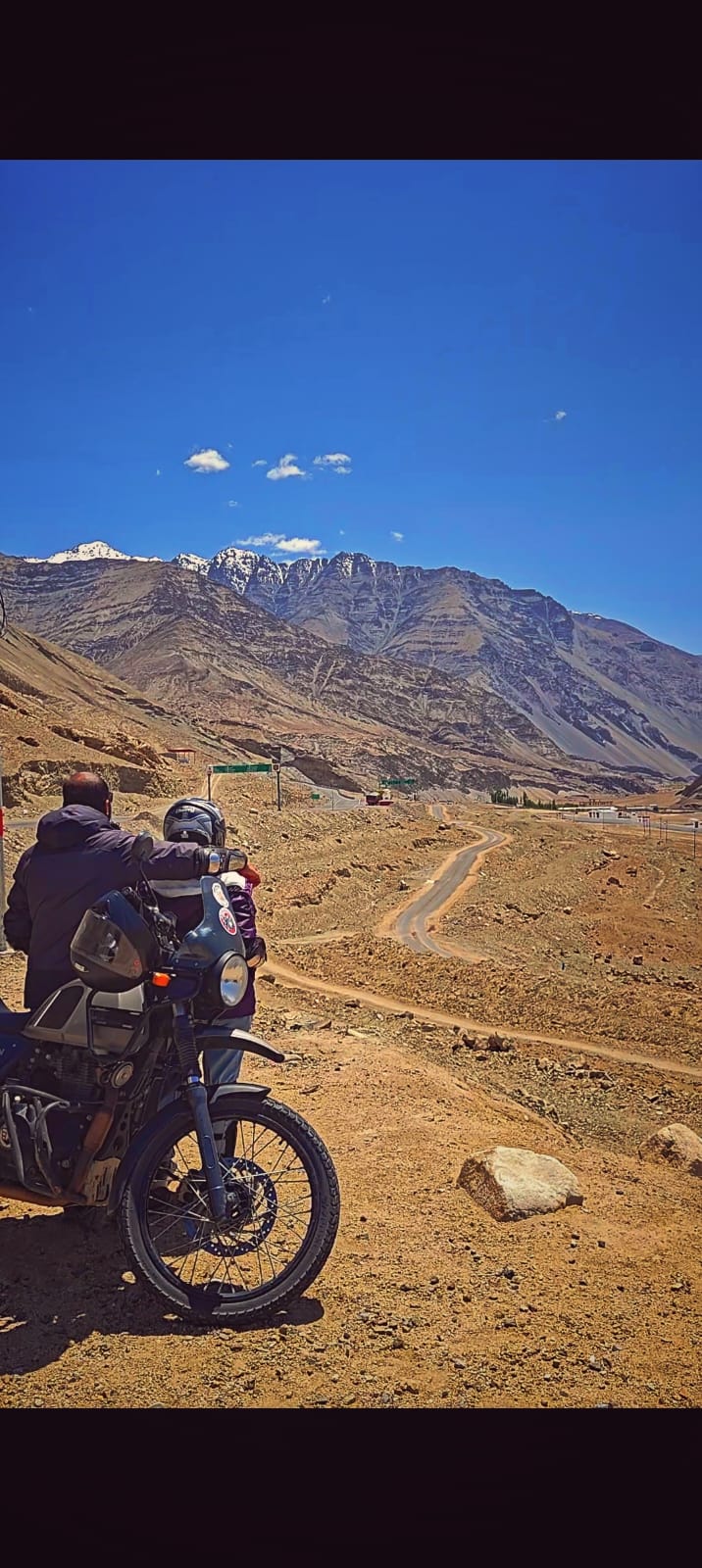
So, this is going to be a story about a road that we didn’t (or rather couldn’t) finish. We thought we were driving to Zanskar. But we didn’t realise the road itself would become the story.
It begins like most roads in Ladakh do. Dusty, adventurous and without commercialised road maps. You leave Leh thinking you’re just going for a ride.
Maybe you’ve packed snacks.
Maybe you’ve checked fuel twice.
Maybe you’ve told yourself this is going to be another beautiful Himalayan stretch.
But it isn’t.
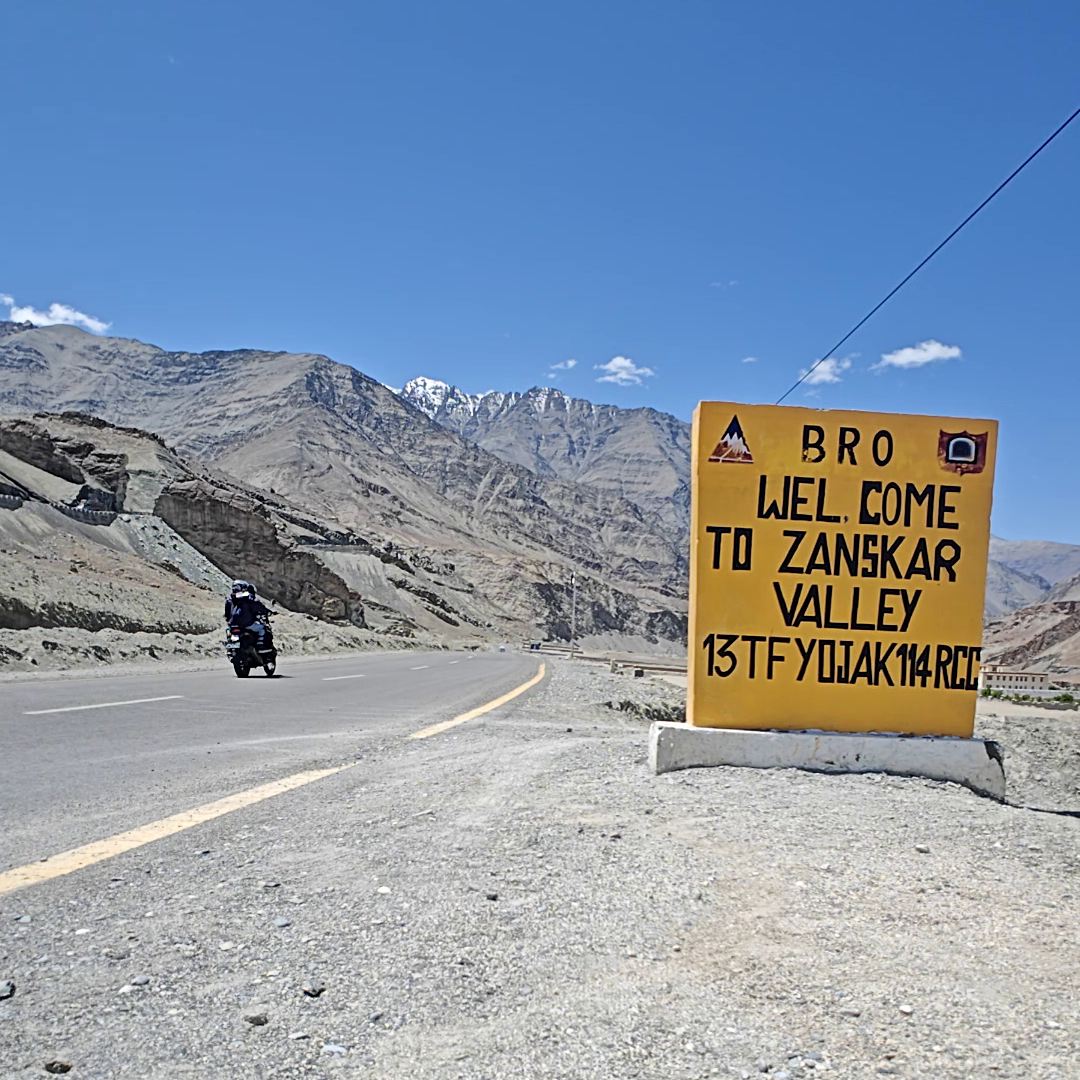
The road from Leh to Zanskar Valley doesn’t perform for you. It doesn’t give you postcard frames every few kilometres.
Rather, it gradually removes the comfort and “fun” from the ride when you go too far in, to return.
Here’s how our story of the bike ride from Leh to Zanskar Valley unfolded.
Transition from Leh to Zanskar Landscape
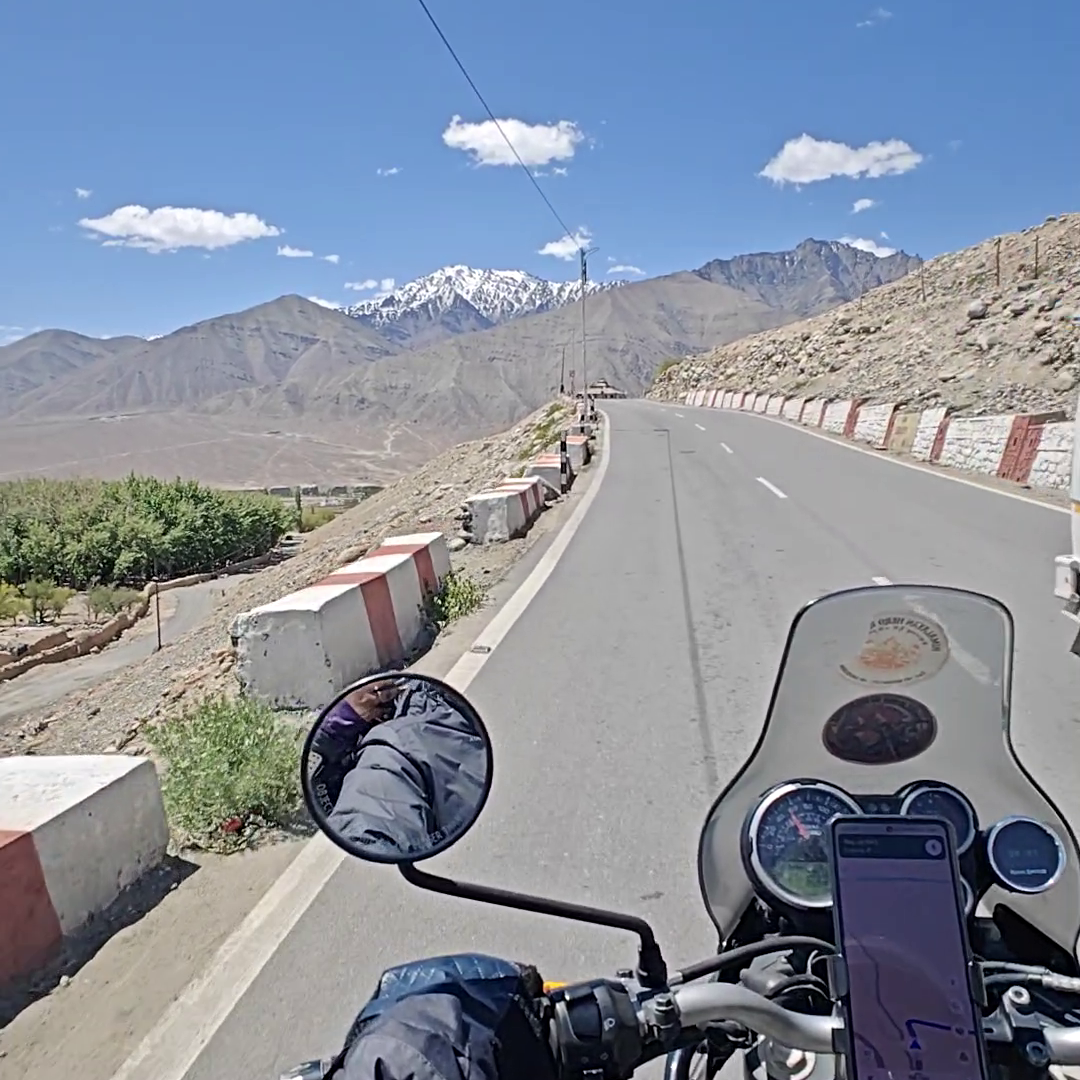
Up until Nimmu, the ride and the landscape feels reassuringly Ladakhi.
As in, you see the Indus flow wide and steady beside you. The water glinting under the high-altitude sun. The road is smooth enough to relax your shoulders. Army trucks pass at intervals. A few bikers overtake you confidently, and signboards remind you of distances and directions.
It feels organised, right? Predictable and even cinematic in the way Ladakh often does.
But beyond Nimmu, there comes a whole transition.
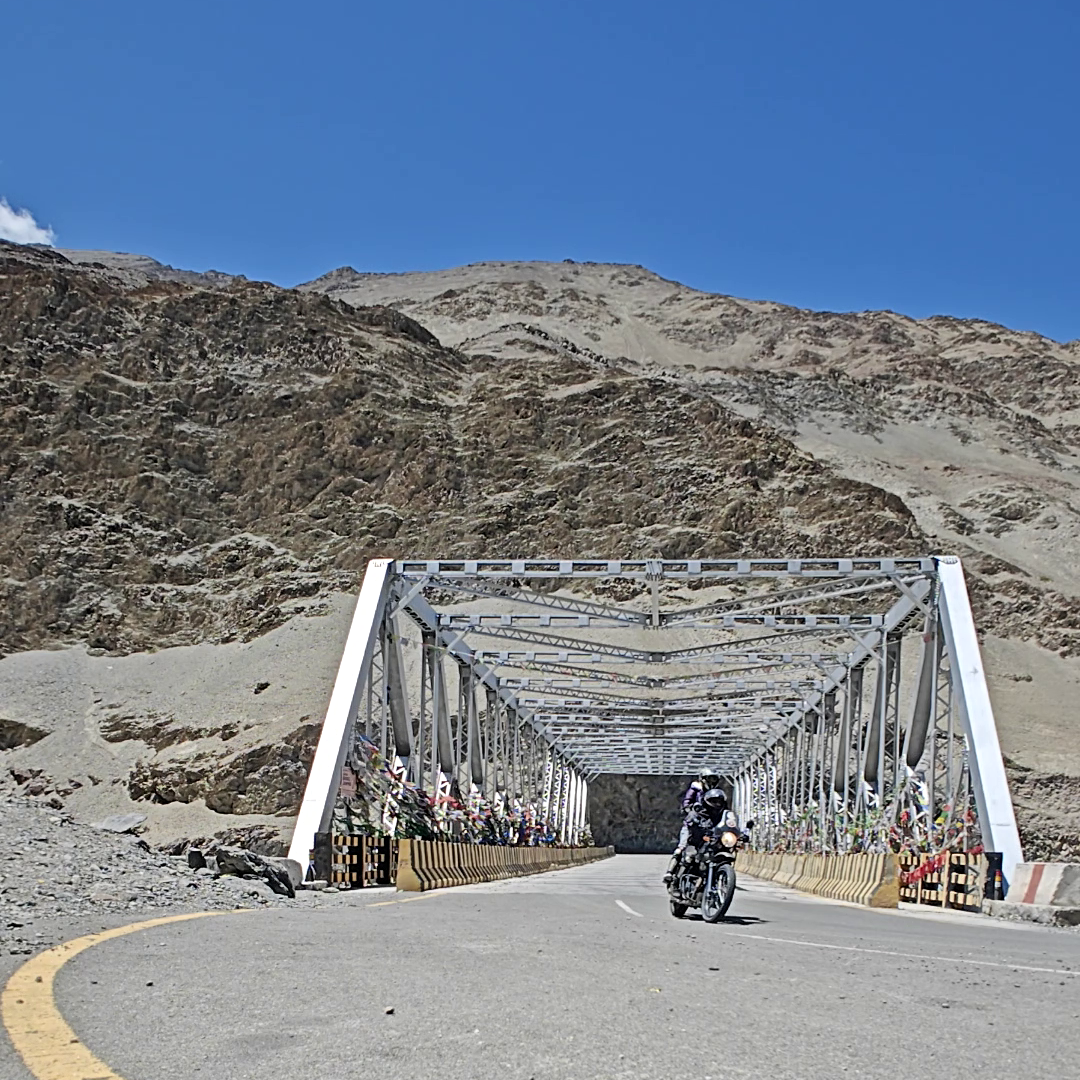
The road doesn’t announce the sharp bends and rough terrain with a warning sign. It just quietly narrows. The clean stretches of tarmac start to break into rough patches. Gravel replaces asphalt in sections.
You instinctively reduce your speed, not prepared for this sudden change.
The mountains start to close in around you. What was once an expansive valley slowly transforms into a tightening gorge.
The sky appears smaller. The road starts hugging the cliff more closely, and you start feeling a bit clumsy as a pillion rider, who has been taking pictures for her blog till then.
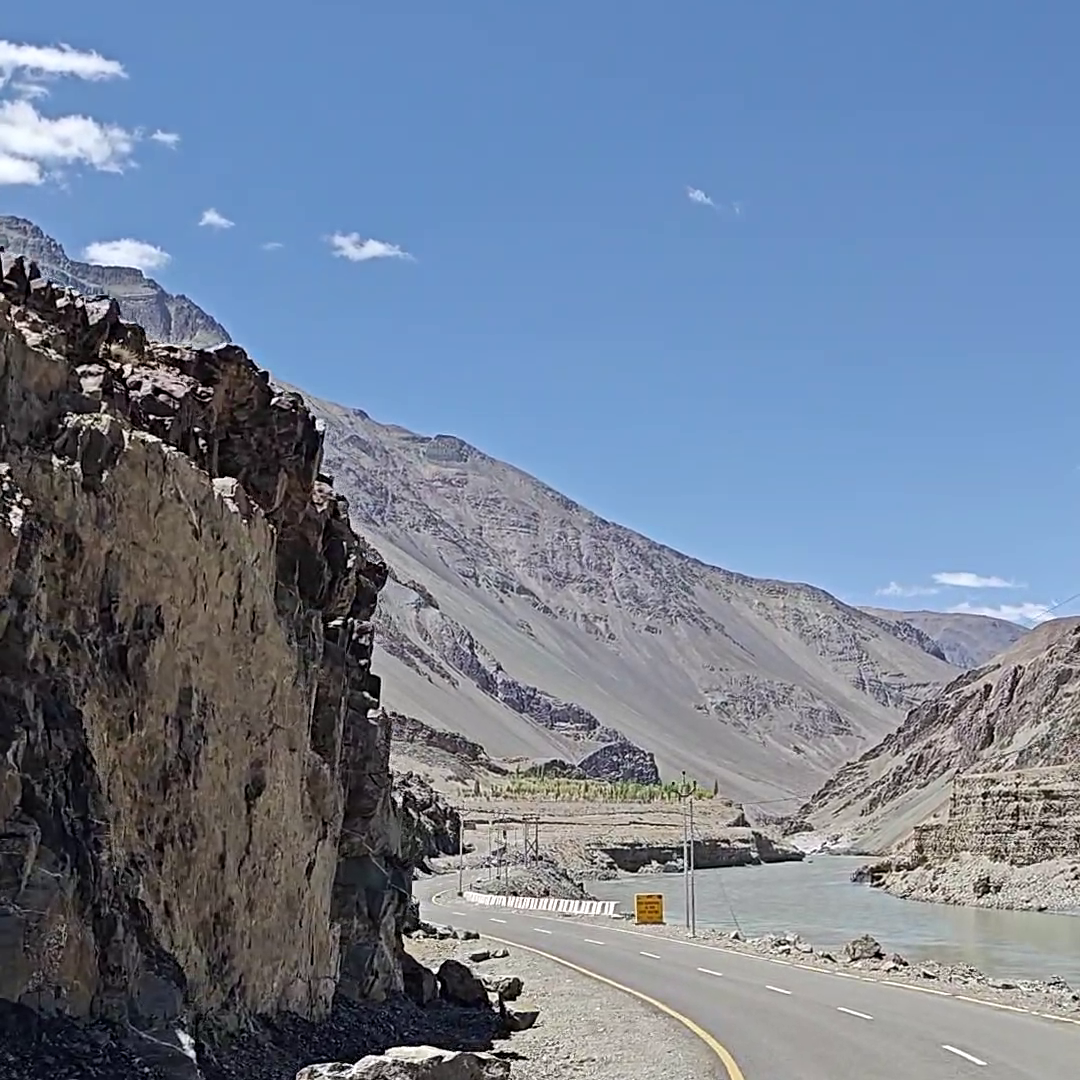
The Zanskar river doesn’t look decorative from up here. It looks overpowering in fact. Even from a distance, you can see how fast it moves, cutting through rock that has stood for thousands of years.
The further you ride, the more isolated and secluded it gets.
There are long stretches where you don’t encounter another soul. Leave alone roadside tea stalls, or even the fellow riders. At this stretch, even the silence feels empty.
It’s a different kind of thrill packed with intimidation of the vastness.
This stretch of the Leh to Zanskar road reminds you that infrastructure here is still negotiating with geography.
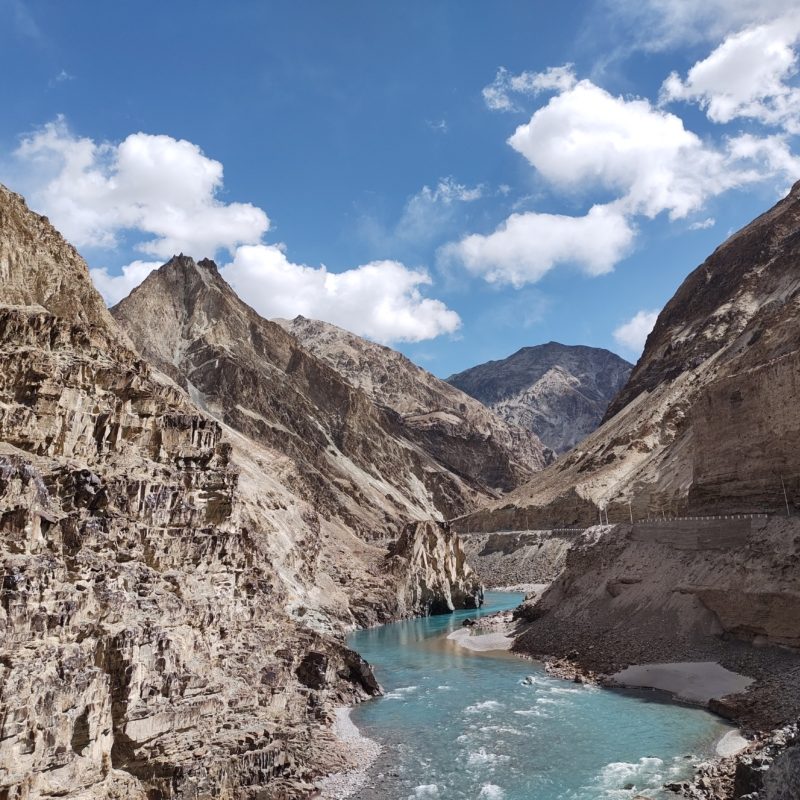
The stretch is filled with landslide debris, and construction equipment stands parked along freshly cut sections. You can see where the mountain has been carved recently to widen the path, and where it might crumble again after the next harsh winter.
Somewhere along this stretch, it becomes an experience, rather than a fun ride.
A Road That Was Once Ice: About the Chadar Route
Oh, here’s something very interesting.
Somewhere along the gorge, while riding above the Zanskar River, we remembered that this wasn’t always a road at all.
Fun fact: The Zansker river becomes a road for commute in winters.
For centuries, when heavy snowfall blocked the mountain passes and cut Zanskar off from Leh, people didn’t wait for rescue. They waited for winter.
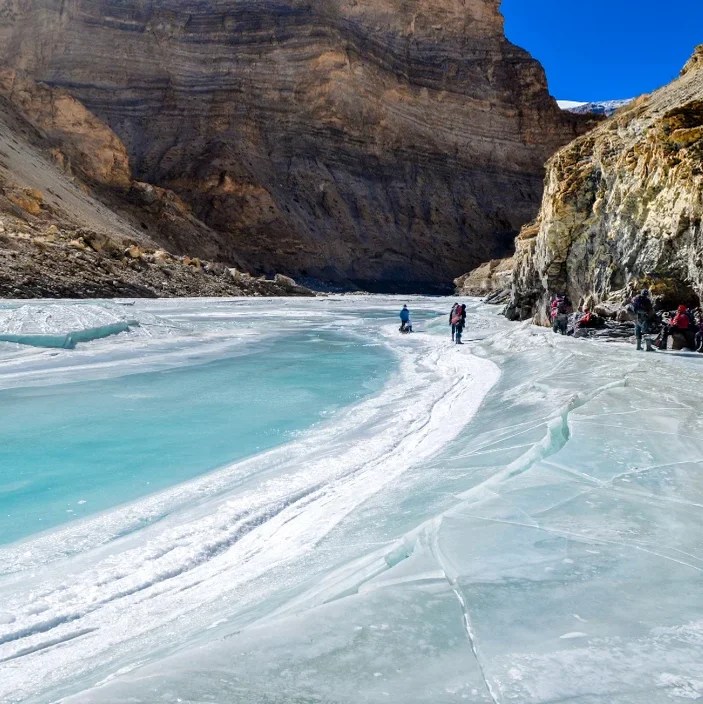
What happens is, when temperatures drops low enough, the Zanskar River freezes into a thick sheet of ice. Popularly known as the Chadar.
And this my friend, becomes the Ladakhi highway.
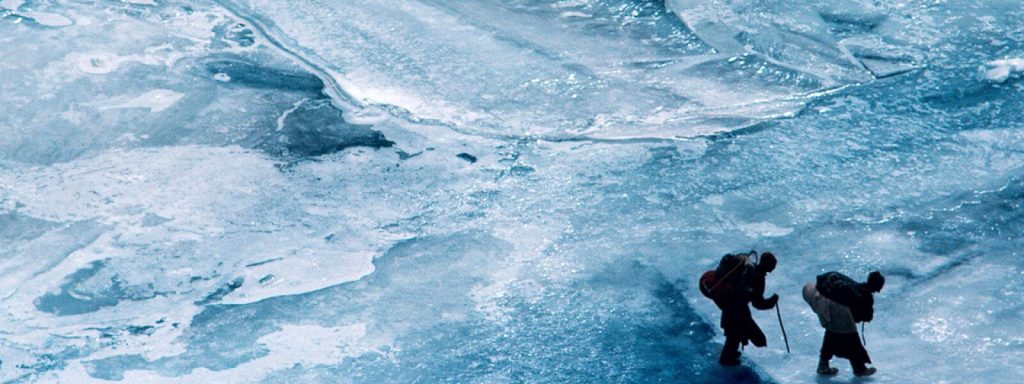
Earlier, before technology and infrastructure reached Zanskar, traders, monks, villagers, even children used to walk for days over that frozen river. They carried supplies, letters, medicines, and sometimes even hope.
Now, at present, the Chadar is just a recreational trek route. As most of you must know. What feels like adventure to us: “the famous Chadar Trek in Zanskar” was once daily life here.
People calculated which parts of the ice were safe. They hugged cliff edges where the river froze thicker. They timed journeys around weather and instinct, not Google forecasts. Can you imagine?
And now, we were riding on a half-constructed mountain road slowly replacing that frozen lifeline.
With helmets on, engine humming, riding where others once walked on ice in minus 20 degrees, it felt surreal.
Nimmu to Chilling: The Most Adventurous Stretch
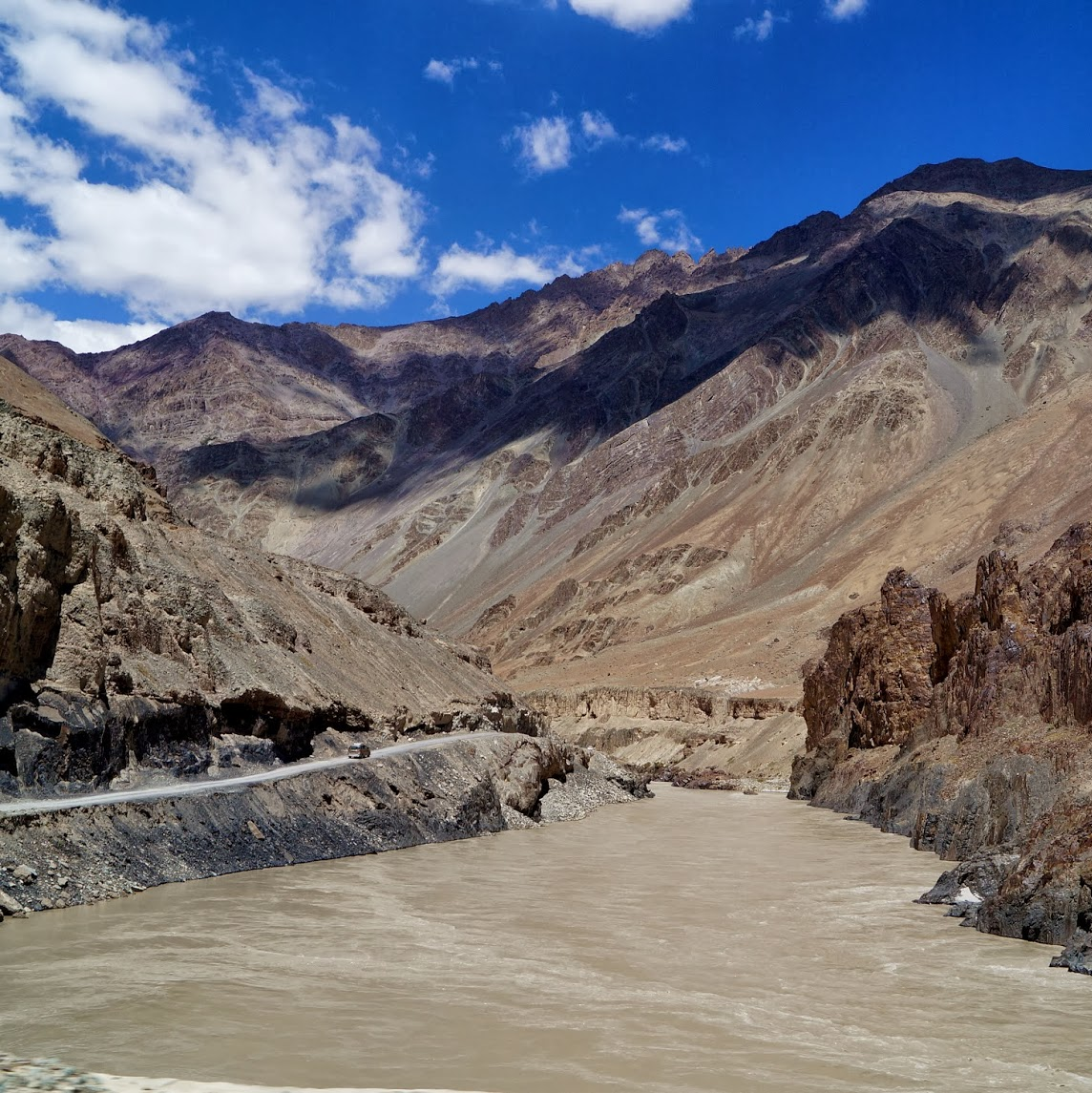
Now comes the part of the most desolate and adventurous stretch, that we were unaware of.
The drive from Nimmu to Chilling is a stretch that isn’t designed for leisurely cruising.
The road is carved directly into the mountainside, sometimes so tightly that it feels as though it has been sketched in haste and then reluctantly approved by the terrain.
On one side, vertical rock walls rise sharply, layered in shades of brown, grey, and rust. Basically, we were witnessing the geological timelines exposed in plain sight. And, on the other side, the land falls away abruptly into the deep gorge of the Zanskar rapids.
What a mighty view! [pic]
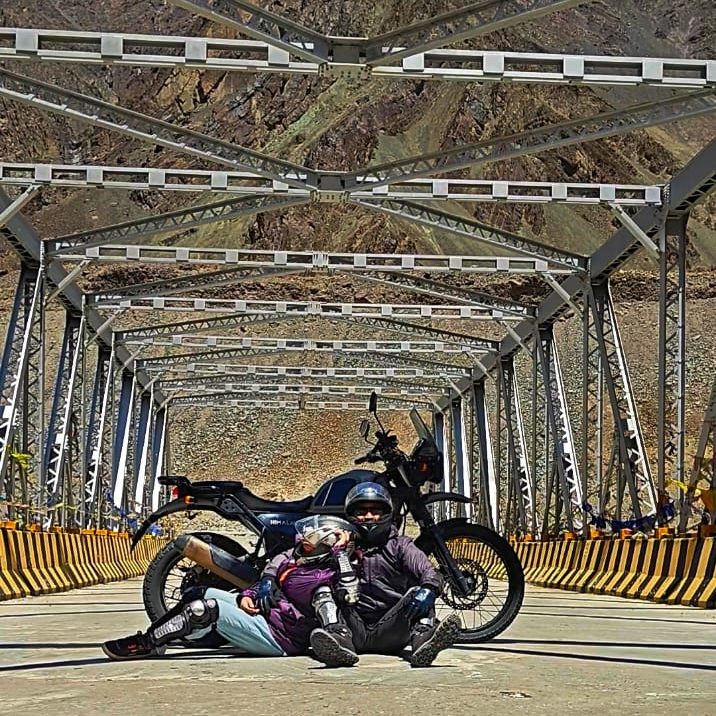
Riding here demands full attention. And kudos to Ayush, for the patience and skill that he portrayed then. Because we were by ourselves. No backup, no support.
If we would fall into the gorge or even slip, there would be no one to help.
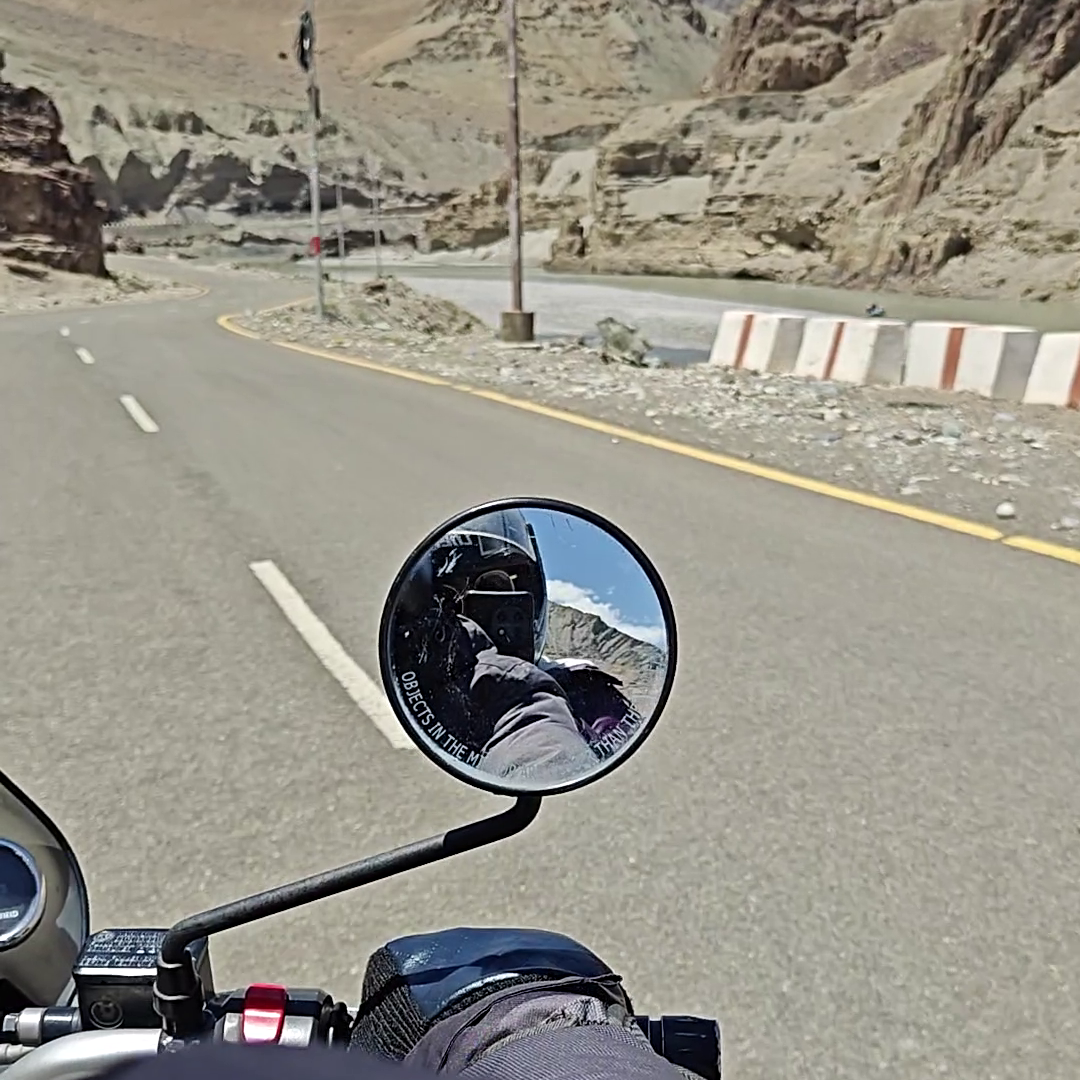
At one particularly narrow curve, Ayush muttered, half amused and half serious, “This is the kind of road that makes you earn the view.”
He wasn’t wrong.
Below us, the Zanskar River flowed, fed by glacial melt, which gives it that unmistakable blue-grey colour.
And, the gorge also creates its own microclimate. Yes, trust me!
Even under bright sunlight, the air feels cooler here. Wind funnels through the narrow valley, carrying a sharp chill that lingers unexpectedly.
It’s easy to understand why winters here are brutal, and why the river eventually freezes. Also, what makes this stretch especially striking is the contrast.
For kilometres at a time, there is nothing but stone, dust, and river. No shops. No settlements. No visible cultivation. It feels almost lunar in its isolation.
And then, suddenly, a patch of green appears.
A small cluster of poplar trees. A narrow strip of cultivated land. A few whitewashed houses with flat roofs.
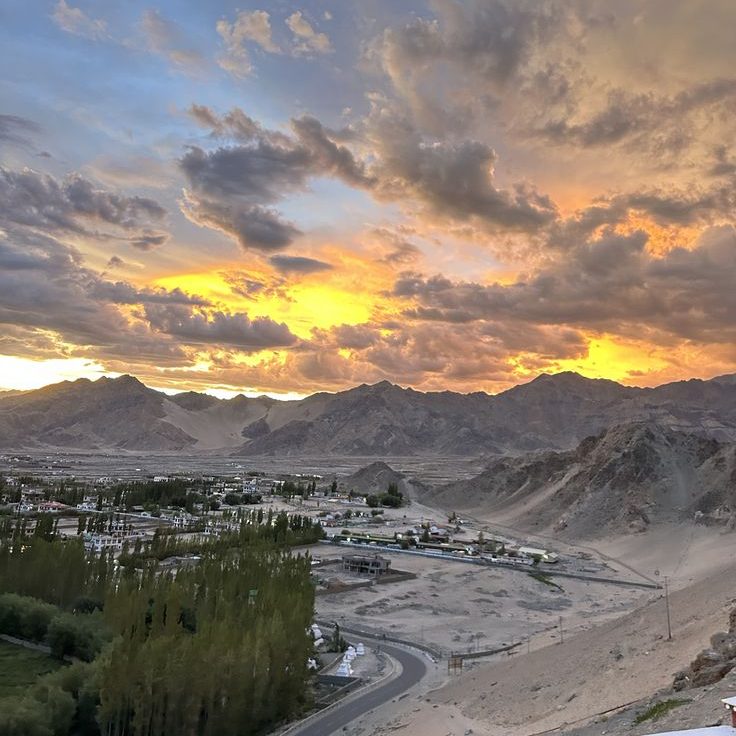
The greenery is not decorative; it is survival. As we read, meltwater is channelled through narrow irrigation lines to grow barley, peas, and seasonal vegetables. And livestock (goats, sheep, dzos) graze on whatever sparse vegetation the valley allows.
We slowed down near one such settlement, simply to absorb the contrast. After long stretches of emptiness, seeing human life, children playing near a field, someone stacking fodder, smoke rising faintly from a kitchen, felt warm. And we needed it.
I also wondered, how, for us, this stretch is an adventure. But for the people who live here, it is a lifeline. It connects them to hospitals in Leh, to markets, to schools, to supplies that cannot be grown in this harsh terrain.
Oh to think what an experience this 5 hour ride was enriching me with!
Chilling Village Ladakh: A Pause, Not a Destination
As I was saying, by the time we reached the Chilling village of Ladakh, the ride had already shifted from scenic to serious.
The road, which had been gradually narrowing since Nimmu, now felt fragile, carved into the mountain rather than laid upon it.
Water from small mountain streams trickled across the road, leaving thin sheets of mud that had to be dealt with a slow, careful riding. It was clear that this stretch of the Leh to Zanskar Valley road was still under construction.
Soon, ahead of us, the road curved sharply and disappeared behind a wall of stone. There were no signboards, no visible traffic coming from the opposite direction. Just silence and the low, constant sound of the Zanskar River flowing somewhere below.
We had to pause.
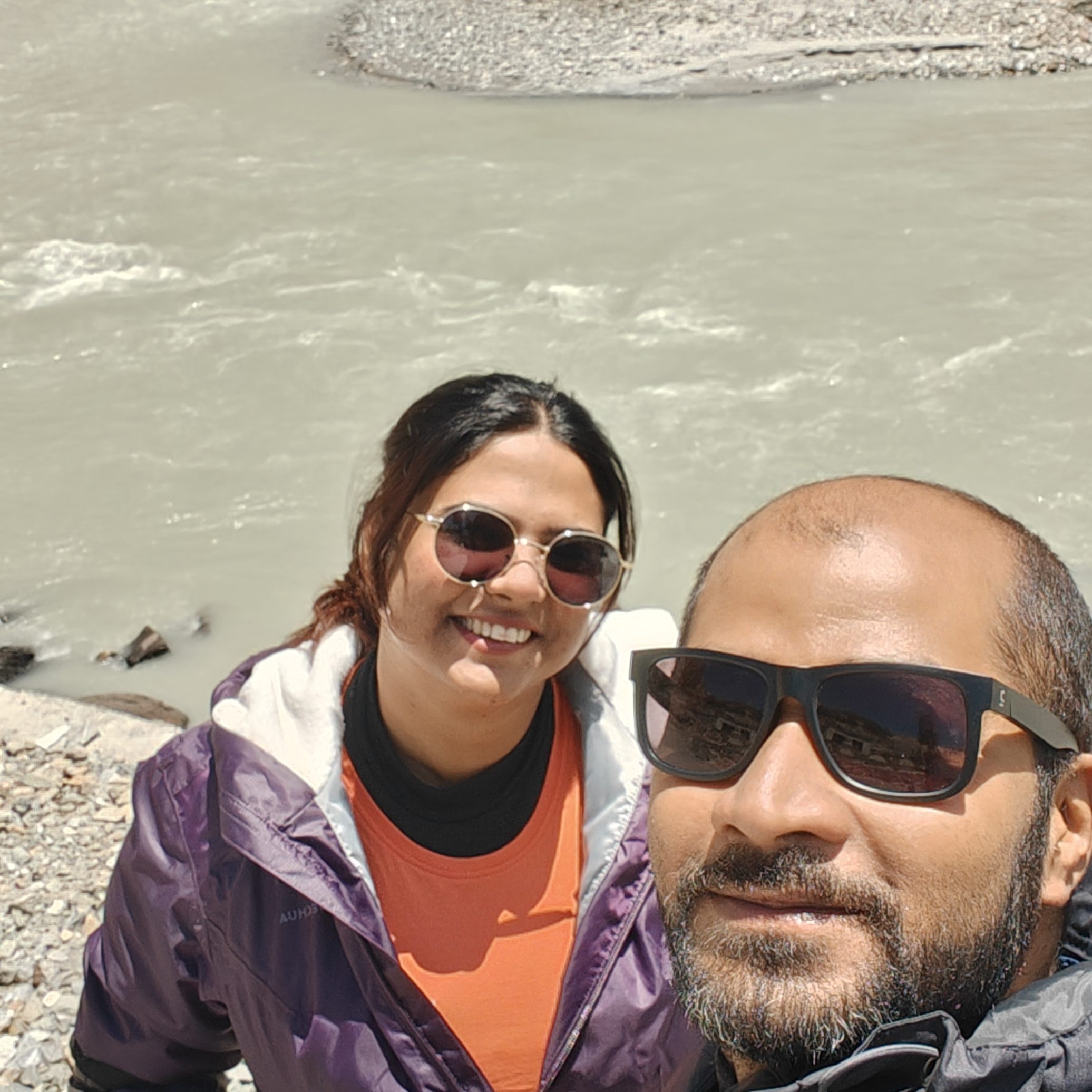
Chilling itself sits at a natural transition point along the Zanskar River.
Historically, this village has been known as a crossing hub, especially in winter, when the famous Chadar route begins from here.
In summer, however, Chilling feels different.
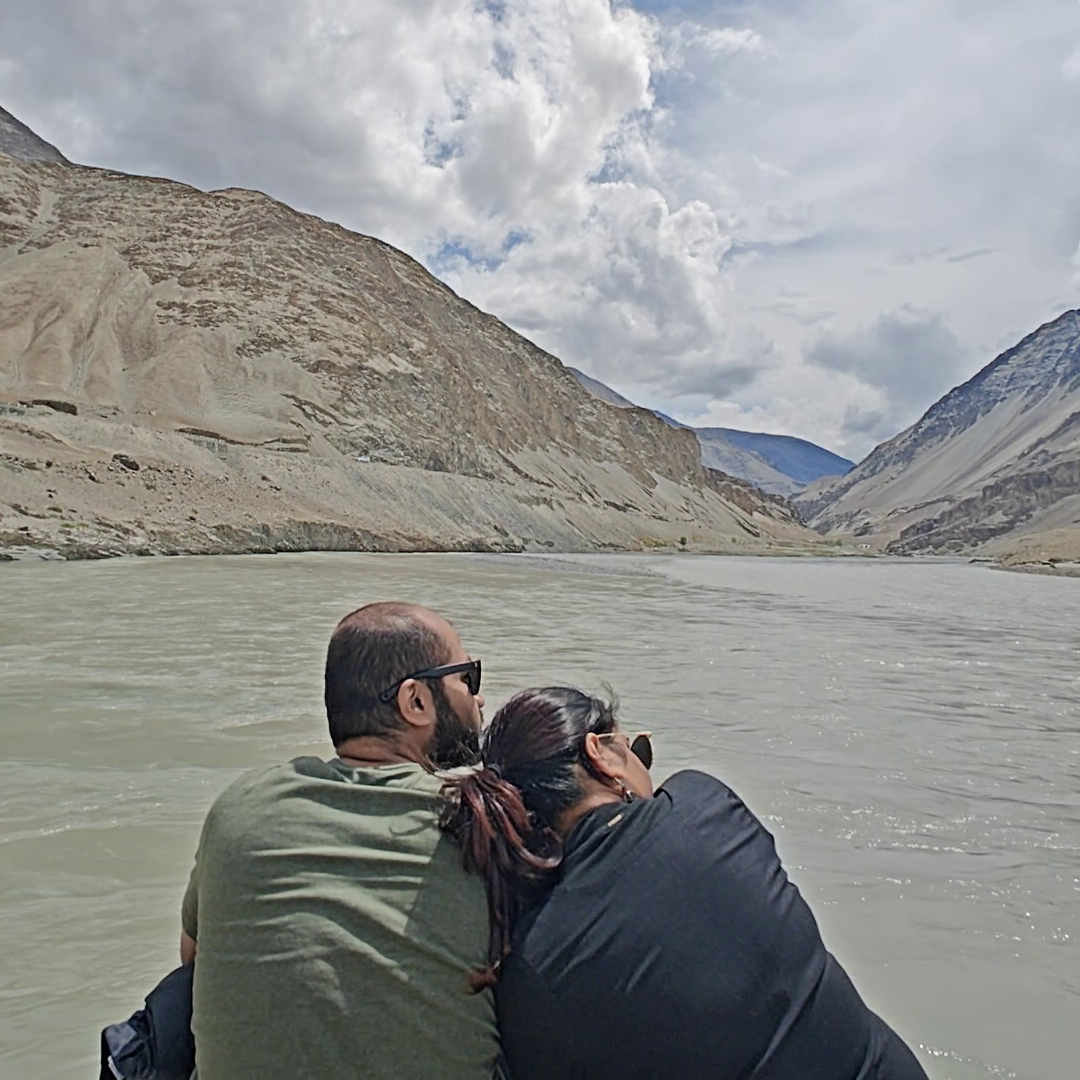
The river is wide and powerful, no longer frozen but alive with force. The same waters that become a walking route in winter now host river rafting expeditions through the dramatic Zanskar gorge.
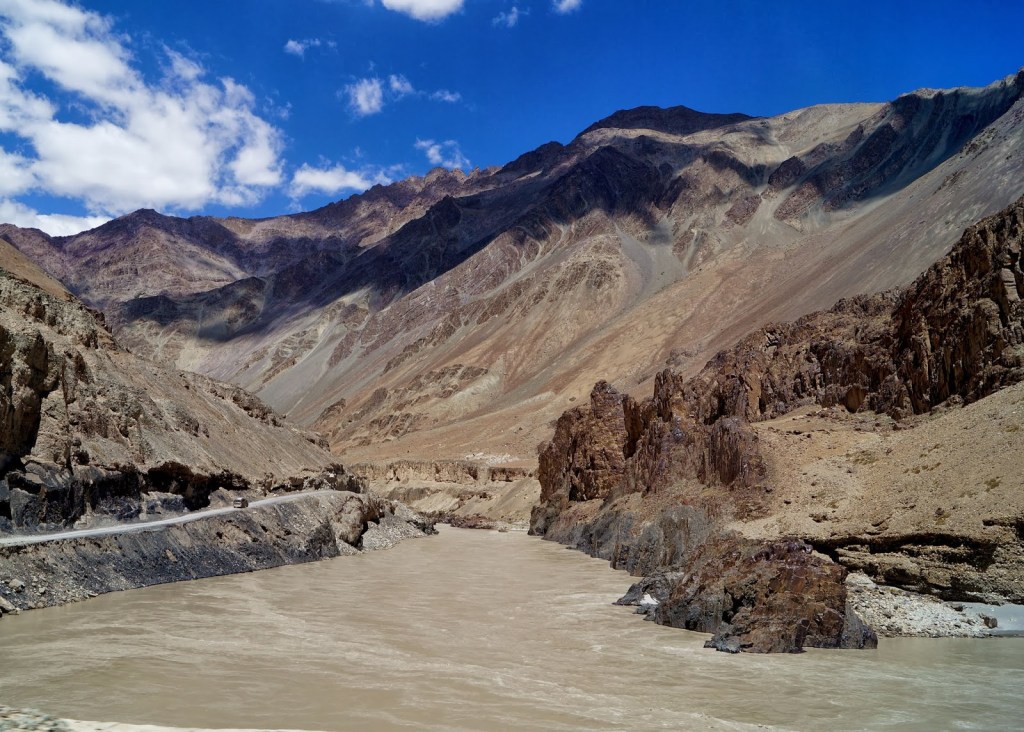
We parked our bike near the riverbank and walked toward the sound of water.
The wind was sharper here. A few houses stood nearby. Small cultivated patches of green surrounded the homes, fed by carefully channelled meltwater.
A local man stood by the river, basking in the sun with a friendly smile. We greeted him, and as conversations in the mountains often go, we began without formality. We asked about the road, about how far it remained drivable.
He explained that the road was about to get worse, just ahead of us and it would be best to return to Leh, before sunset. I was sure, he meant it.
We looked ahead once more at the stretch of road that curved into the mountains. It wasn’t officially closed. It wasn’t impossible. But with only the two of us, limited traffic, and visible construction ahead, we had to ask ourselves an honest question: were we continuing because it was wise, or simply because we didn’t want to turn back?
After standing there for a while, absorbing the stillness and the scale of the place, we made our decision. The road would still be there another day, perhaps more stable, perhaps more complete. Zanskar wasn’t going anywhere.
So we rode back toward Nimmu, packed with a fresh love for rides through the mountains and a little bit of disappointment at the incomplete quest.
But hey! Prevention is always better than cure.
Adventure, Reframed
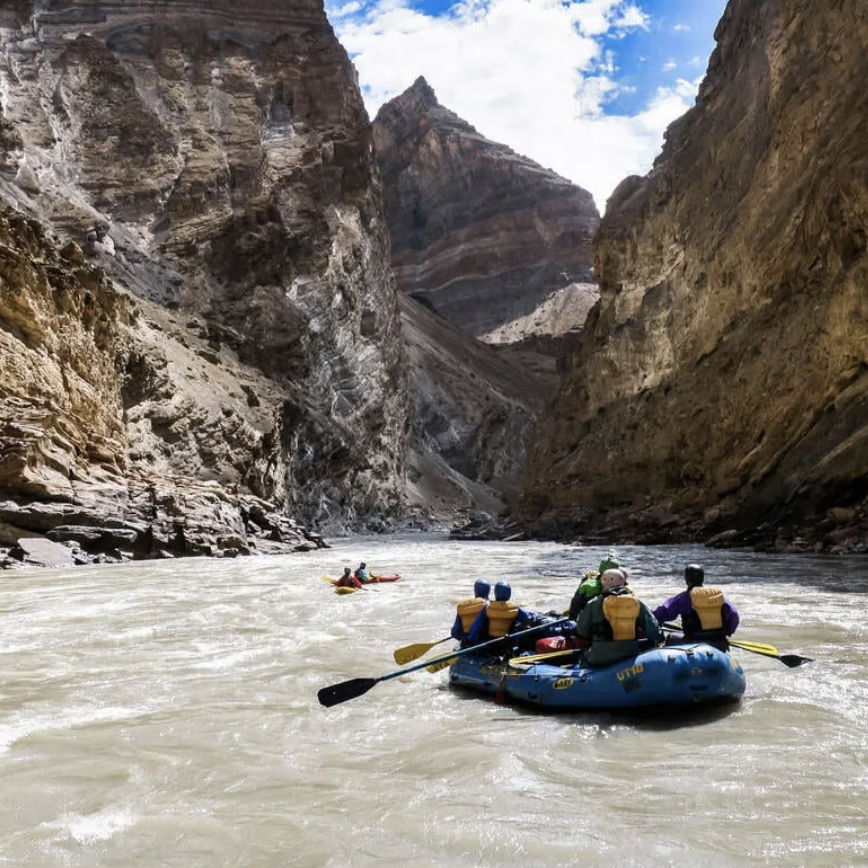
Here’s a major takeaway from the ride in Zanskar valley.
One of the most fascinating things about this landscape is how it has evolved from a place of survival to a place of adventure, without ever losing its edge.
Take the Zanskar River, for instance.
In summer, when the glaciers begin to melt and snowfields loosen their grip, the river swells into a powerful, fast-moving current. This is when river rafting in Zanskar Valley comes alive.
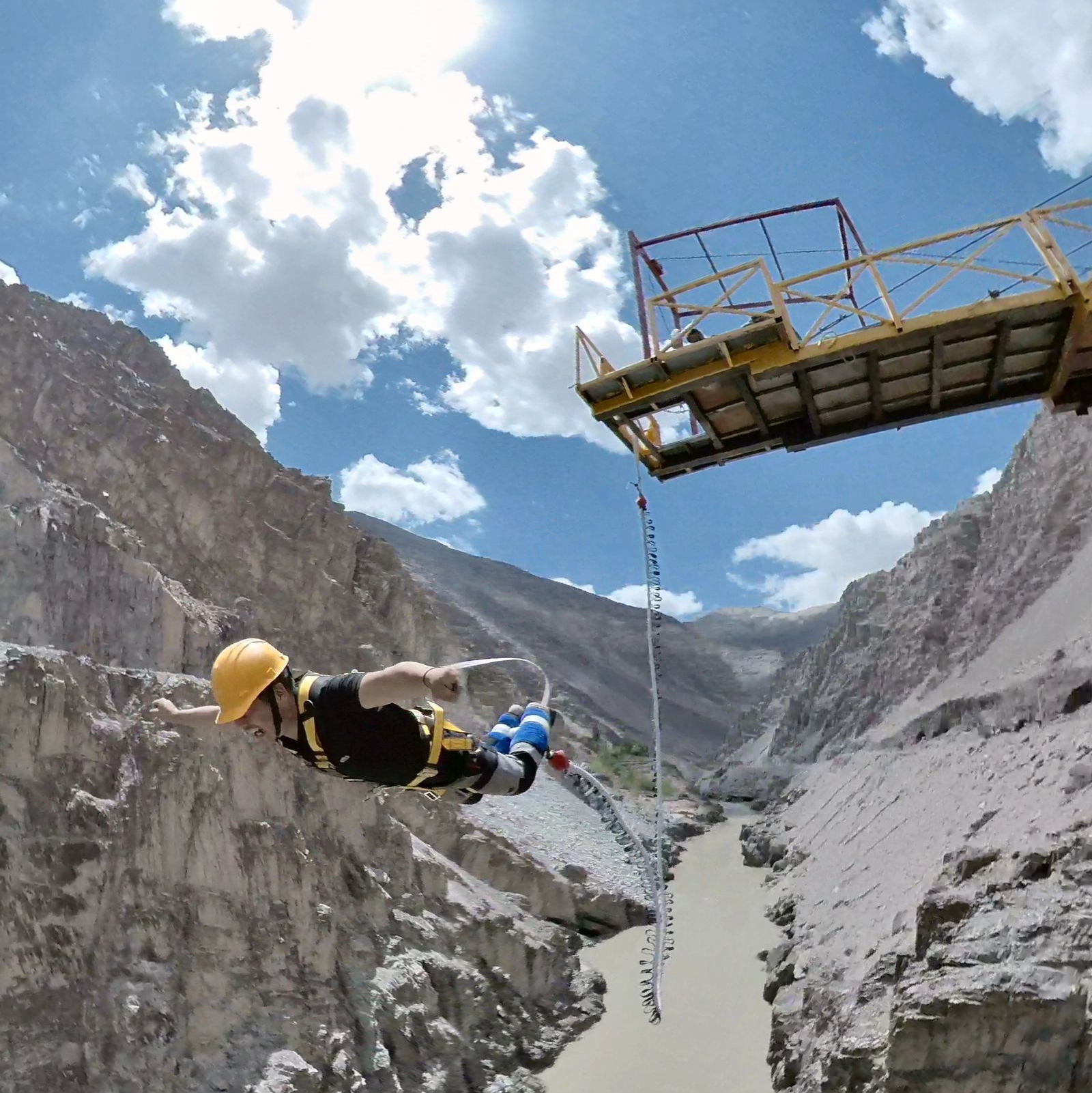
Then there’s bungee jumping in Ladakh, which has found its place in this dramatic topography. Imagine standing on a platform suspended over a Himalayan cliff. The jump lasts only a few seconds, but the sensation stretches longer. You’re suspended in a landscape that has existed unchanged for centuries.
And then winter arrives, and everything transforms again.
When temperatures drop drastically, layers of ice begin to form along the river surface. This is when the famous Chadar Trek begins. What is now considered one of India’s most extreme winter treks was once the only winter lifeline for the people of Zanskar.
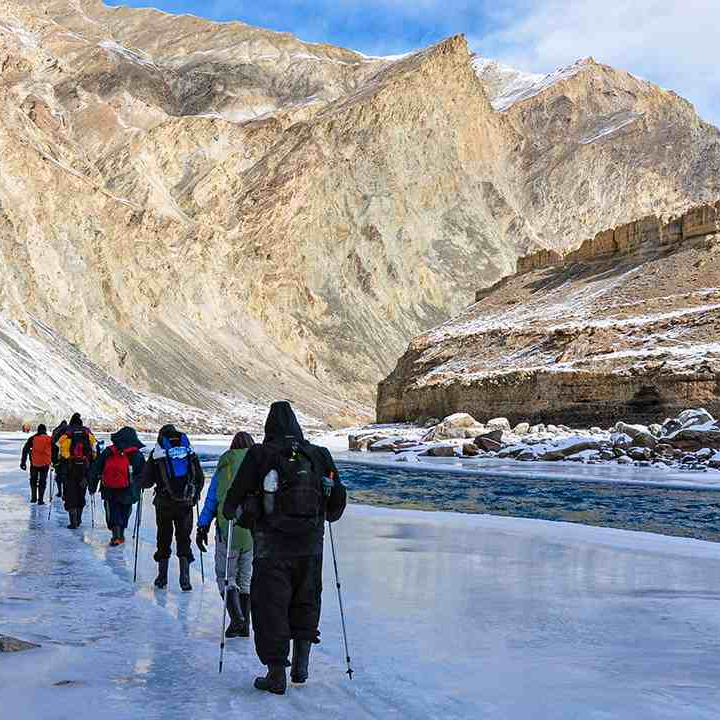
There is room here for awe at any age.
The adventure is real.
The thrill is undeniable.
But the foundation beneath it all is survival, and that is what makes this region unforgettable.
If You Ever ride from Leh to Zanskar Valley
If you ever drive from Leh toward Zanskar, don’t rush it.
Don’t treat it as a checklist.
Stop where the road narrows. Listen to the river. Notice the green fields that shouldn’t exist but do. Speak to someone without asking for a photograph.
And if the road feels uncertain, unfinished, or heavy, it’s okay to turn back (as we did)!
Some places aren’t meant to be consumed.
They’re meant to be experienced. Don’t you agree?
That day, we didn’t reach Zanskar.
But we left with a deeper respect for a region that has survived centuries of isolation. And maybe that’s what this road really is.
Not an entry point. But a reminder to experience what is thrown at you.
Happy reading and riding!


 Invisible Cities
Leave a comment