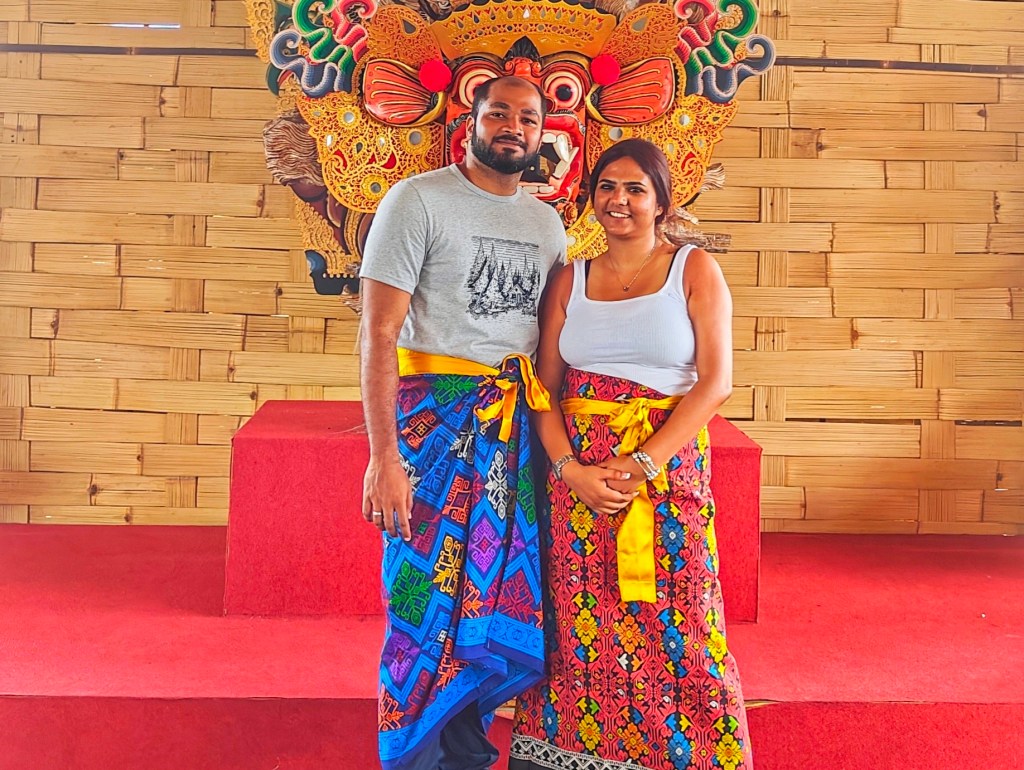
Firstly, did you know? Indonesia is the world’s largest Muslim-majority country. And then there is Bali. A tiny island that is shaped by Hinduism. This is diversity at its best. We will tell you why…
To begin with, Ayush and I are atheists, but we come from Hindu families. So Bali did not feel unfamiliar in terms of religion. What we were curious about was something else.
How does a Hindu-majority island function inside a largely Muslim country?
And what does that look like in everyday life? Because as far as we know, Bali doesn’t claim to be secular. You get the curiosity here, don’t you?
Before this trip, that contrast was just something we had read. Once we landed, it started showing up in conversations, in roads, in temples, and in lovely unexpected ways.
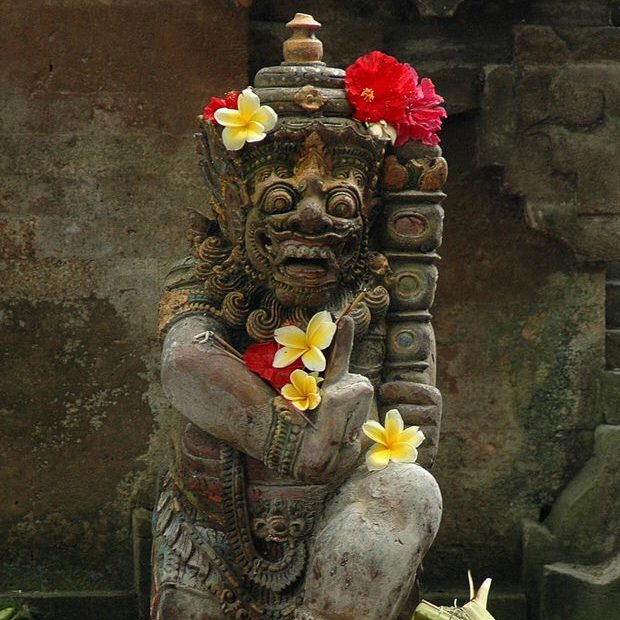
On our first drive, from the airport to the hotel, we asked our driver this exact question. He said, “Here, it is normal. Bali is Hindu. Other islands are different. But it’s very peaceful”.
Imagine, a minority section saying this! I was hooked from that moment, and felt a tinge of love and warmth for the people, right from there on.
Daily Life in Bali
On our second morning, we stepped out of our villa and paused at the entrance. There was a canang sari placed right where we were about to step.
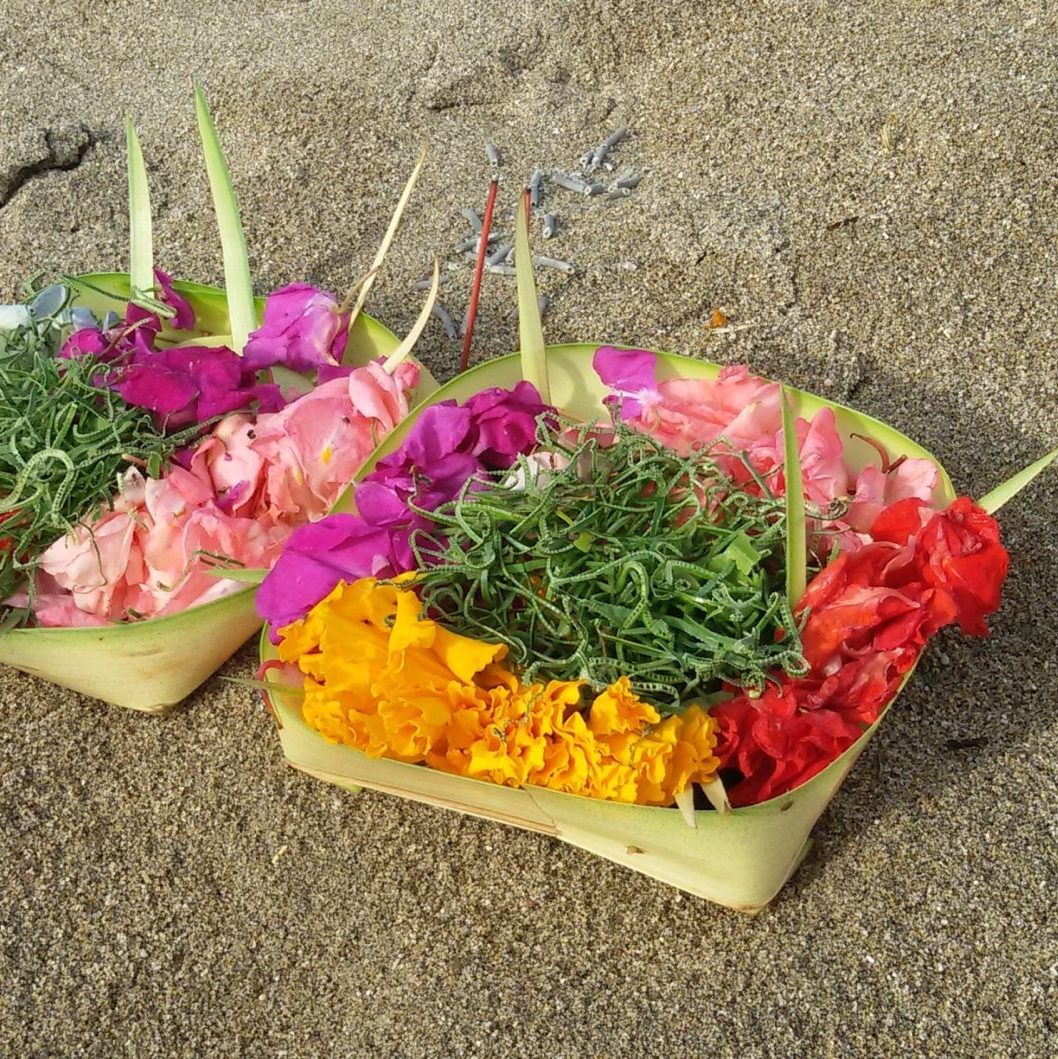
So, a canang sari is a small handmade offering made of palm leaves, flowers, and incense, placed daily across Bali as a gesture of gratitude.
We had seen offerings before in India. That part was not new. What felt different was where they were placed and how often they appeared.
Not just inside temples or near home entrances, but on sidewalks, in the middle of busy streets, outside every single shop, and even near drainage covers. This last bit is shocking, right? I know!
Later that day, we asked our driver why they were placed on the ground so openly. He said, “Because they are for everyone. Not just for gods.”
There, right there. It was the second attack of love and warmth that I felt towards them.
Experiencing Bali as Atheists: What Felt Different
Now this is not new.
We have seen rituals back home that are structured around timing, space, and participation. However, though it’s the same religious beliefs, in Bali, we noticed something else.
Rituals were smaller, more frequent, and spread out through the day. EVERYDAY. There was not a single moment that felt overwhelming. There was no build-up like a big event.
I will tell you about a short experience here.
One evening, we were at a beach café in Canggu. And as it goes, we were surrounded by music, conversations, and people working on their laptops, the usual scene.
But right next to us, one of the staff members placed a small offering, lit incense, and went back to taking orders. He did not open his shoes, or even cared about any one participating. He made it as casual as drinking a glass of water.
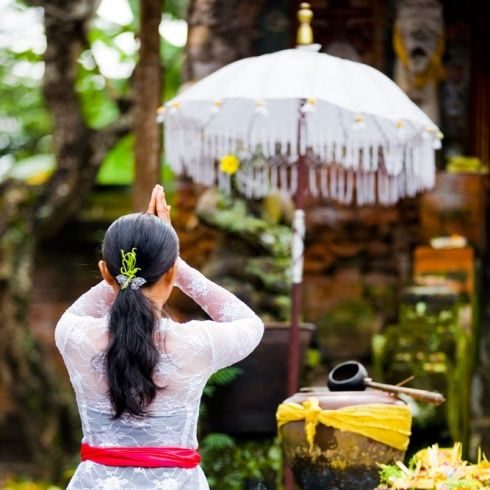
No one stopped talking. No one looked up. Nothing changed in the space.
We were particularly taken aback, because it fit so seamlessly. They didn’t take over the environment or ask for attention. They just existed alongside everything else.
And as observers, that made it easier for us to experience without feeling like we were stepping into something we didn’t (want to) understand.
Phew!
Lempuyang Temple Gates of Heaven: Blending Tourism with Religion
As the itinerary was set by MakeMyTrip, we reached the popular Lempuyang Temple. It is one of the oldest and most significant temple complexes in Bali.
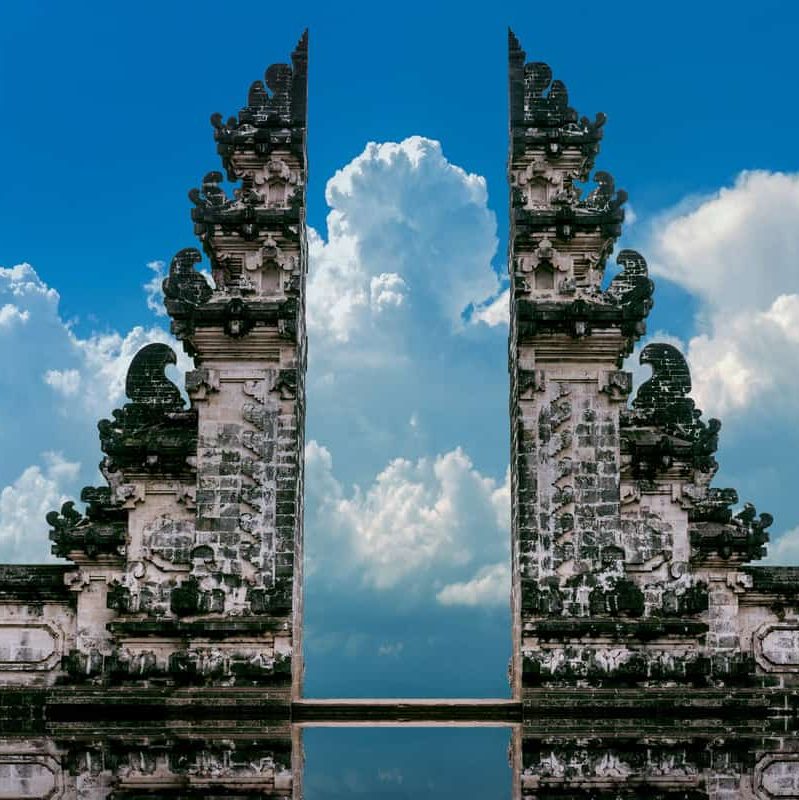
The drive itself set the tone. The roads gradually opened up to views of Mount Agung in the distance, and as we got closer, the architecture started changing. Split gates, stone carvings, and traditional structures popped up, that immediately felt more ceremonial than the rest of the island.
People here say that Lempuyang is not just one temple, but a series of temples built along the mountain, and the famous “Gates of Heaven” is only the first stop.
We reached early, expecting a shorter wait, but there was already a long queue. Most people were there for the photograph you’ve probably seen online, framed perfectly between the temple gates.
While we stood in line, we noticed something else. Locals walked past us without stopping, carrying offerings, heading further inside.
At one point, we asked one of the staff members how it works.
He said, “Tourists wait here. People who come to pray go inside.”
There were no obvious barriers or strict instructions. Everyone just seemed to understand their place in that space.
And that’s how it should be.
Balinese Hinduism and Balance in Everyday Practices
Okay, this one is a bit spooky. So, during one of our drives, we saw smaller offerings placed directly on the ground, slightly away from entrances.
We asked about those.
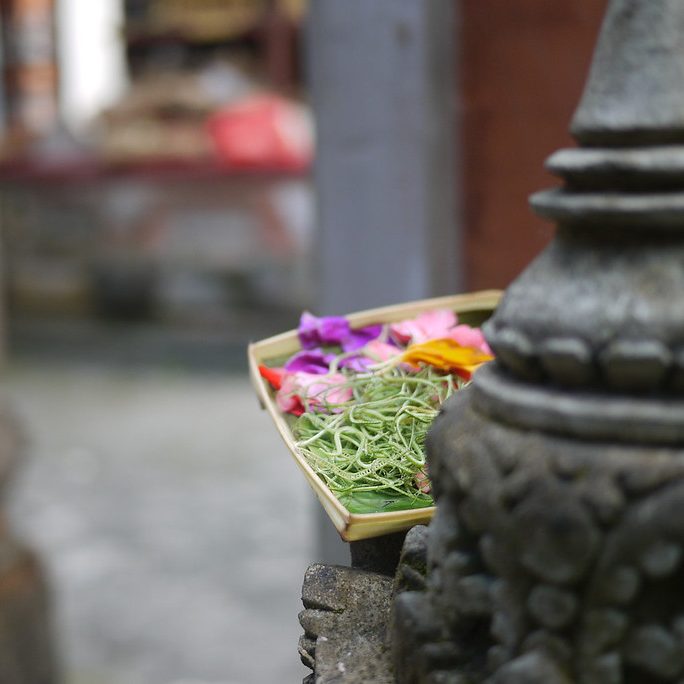
Our driver explained that some offerings are meant for spirits that are not necessarily positive. The idea is to maintain balance.
We had not come across this explained in such a simple way before.
It also explained why offerings were placed in unexpected locations, not just near temples or homes.
As people who have a strong bone interested in history and research of cultures, Bali was offering us more and more. We were hooked!
Kecak Dance at Uluwatu Temple During Sunset
This was my FAVORITE.
On our very first day, we went to watch the Kecak dance at Uluwatu Temple in the evening, just before sunset.
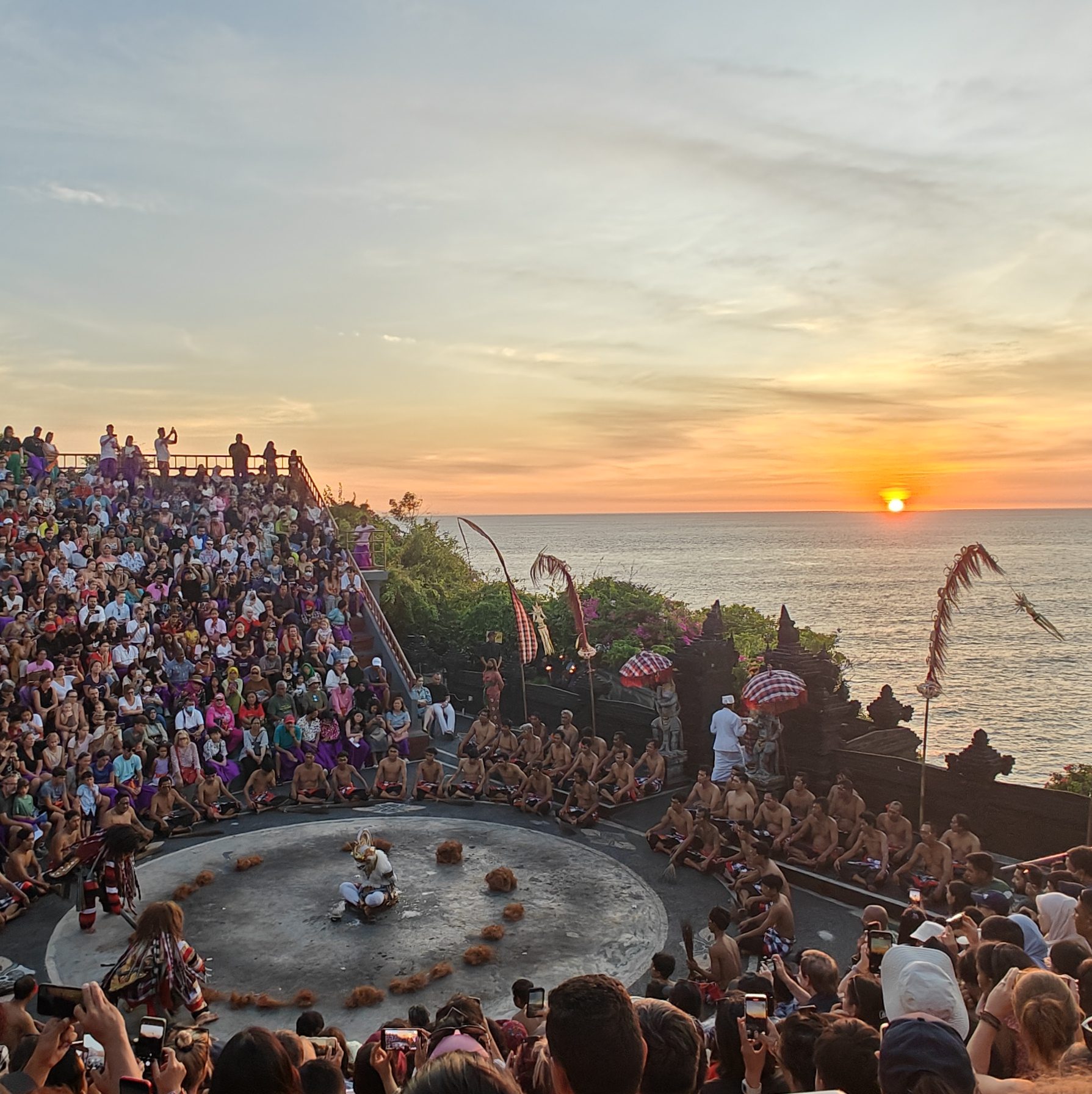
Now, Uluwatu sits right on the edge of a cliff, overlooking the ocean, so even before the performance begins, the setting already feels cinematic. Rows of stone seating face an open stage, with the sea stretching endlessly in the background.
We went in expecting something designed mainly for tourists.
As the sun started to dip, the performance began. There were no instruments, no elaborate setup. Just a large group of men seated in a circle, creating rhythm through their voices. The chanting started slowly and then built up in layers, almost like waves.
The story followed the Ramayana, but even without understanding every detail, it was easy to stay with it. The fire, the movement, and the sound carried most of it.
At some point, it stopped feeling like we were watching a “show.”
We looked around and noticed how everything around it was part of the experience. The temple structure behind us, the sky turning from orange to dark blue, the sound of the ocean in the background.
Nothing felt added or artificial.
The performance, the place, and the timing all seemed to belong together. What an experience!
Art and Architecture in Bali Temples and Streets
Now here’s something.
Throughout the trip, we kept noticing how much attention went into everyday architecture.
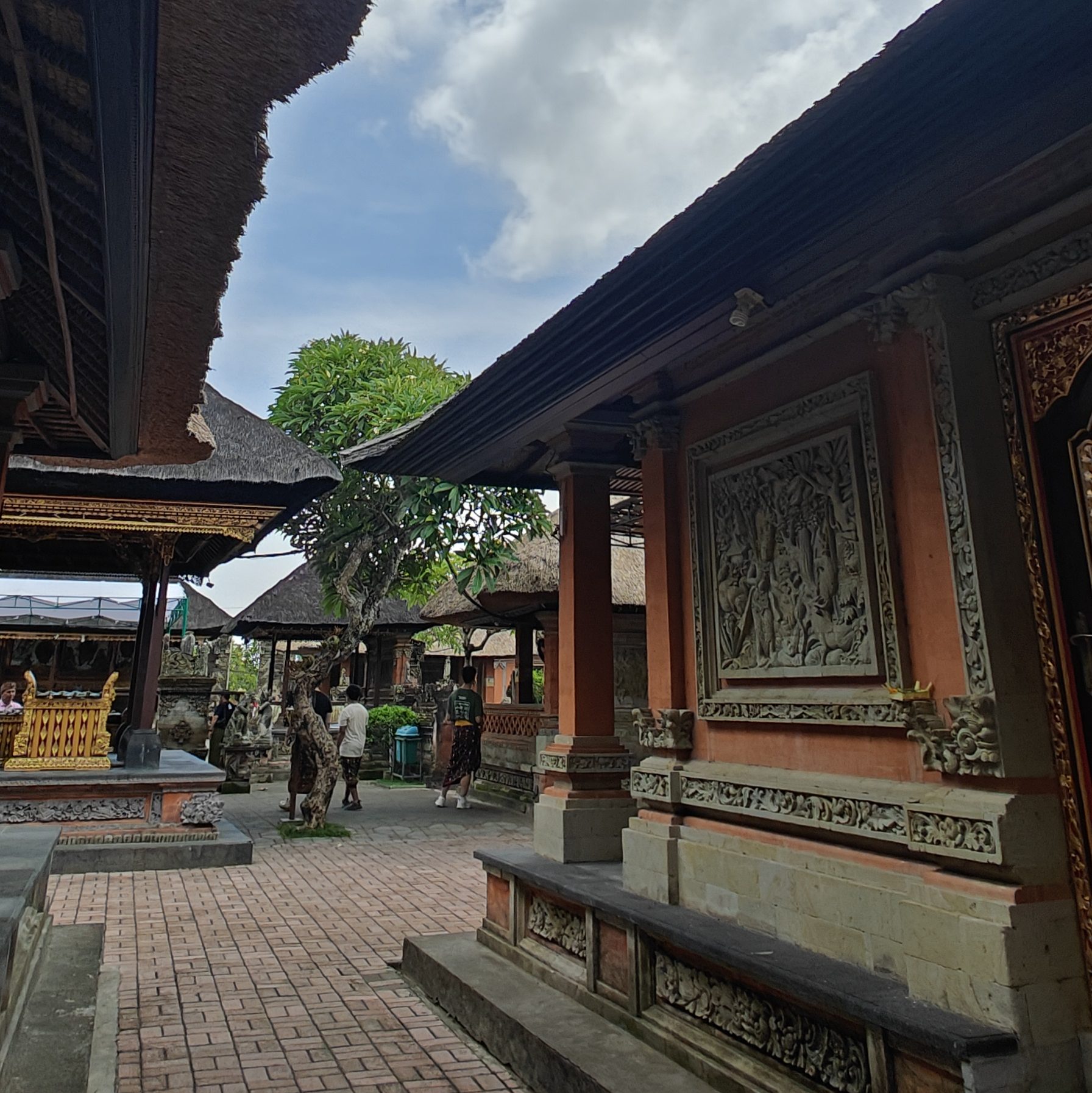
And no, it wasn’t limited to large temples. Even regular homes had defined entrances, small shrines, and carefully structured courtyards. Gates were split in the middle, often symmetrical, with detailed stone carvings that looked intentional rather than decorative.
In places like Ubud, entire streets felt consistent in style. The materials, the textures, even the way walls and gateways were built followed a pattern you started recognising after a point.
We found ourselves pausing often, trying to figure out if these were purely aesthetic choices or if there was more to them.
When we did ask about it, the answer was simple. Some people know the meanings behind the designs, and some just grow up around them.
And that explained it better than a detailed answer would have.
Don’t you think?
Conclusion: Living Around It, Not Inside It
By the end of our time in Bali, nothing about it felt unfamiliar anymore.
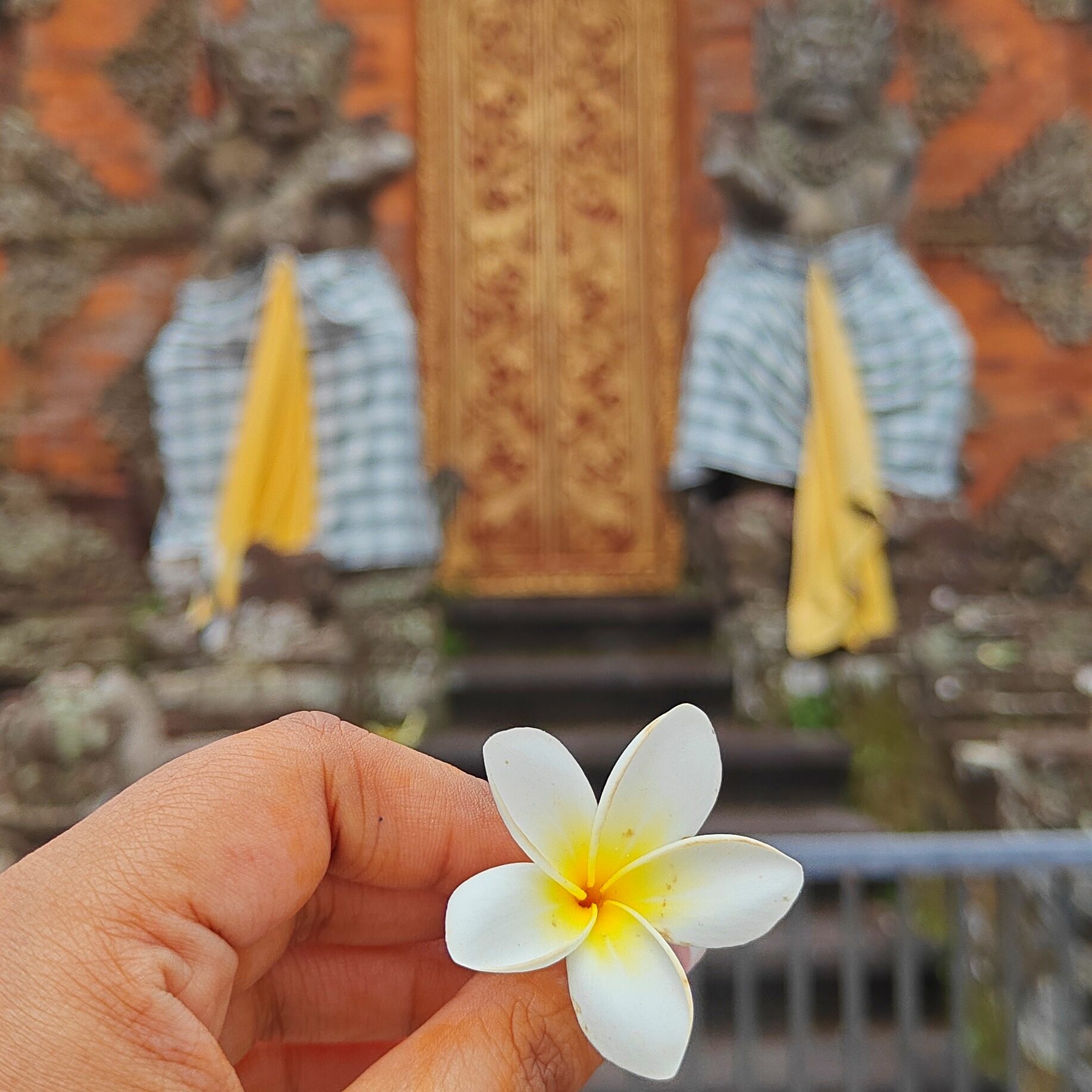
What had caught our attention on day one slowly blended into the background. The offerings, the temple entrances, the rituals through the day. They were still there, just not something we were actively trying to decode anymore.
We didn’t leave Bali thinking deeply about religion. We left thinking about how differently it can exist.
Back home, even with the same roots, religion often feels like something you step into. It has a time, a place, and a certain way of doing things. In Bali, it felt like something you move around. It doesn’t ask you to pause your day or change your pace. It simply continues, whether you engage with it or not.
Here in Bali, somewhere between cafés, temple gates, long drives, and evening performances, it all started to make sense without needing an explanation.
It worked.
And maybe that’s what made it so easy to experience, even for us.
Because in Bali, religion doesn’t demand space. It is a part of it.


 Invisible Cities
Leave a comment